Thrown Under the Bus: What’s down the road?
By: Samvruth Kanduri
You're just chilling on your bus, slumped on the seat, lazily scrolling on your phone, your mind trite and jaded. You're eager to get home, have dinner, hop on CoD with your friends, and go to bed.
The world was not on your side however, because as you were entertaining yourself with your thoughts, you just happened to notice the bus turning right at a corner where it usually turns left. Your brain whirls around, comprehending all the events that would follow; Why did the bus change routes? Who all are involved in this change? What do the others think?
While these changes were designed to address current problems, no solution is flawless. Consequently, they have introduced new challenges. Though these issues do not affect everyone, they place critical pressure on those who are impacted.
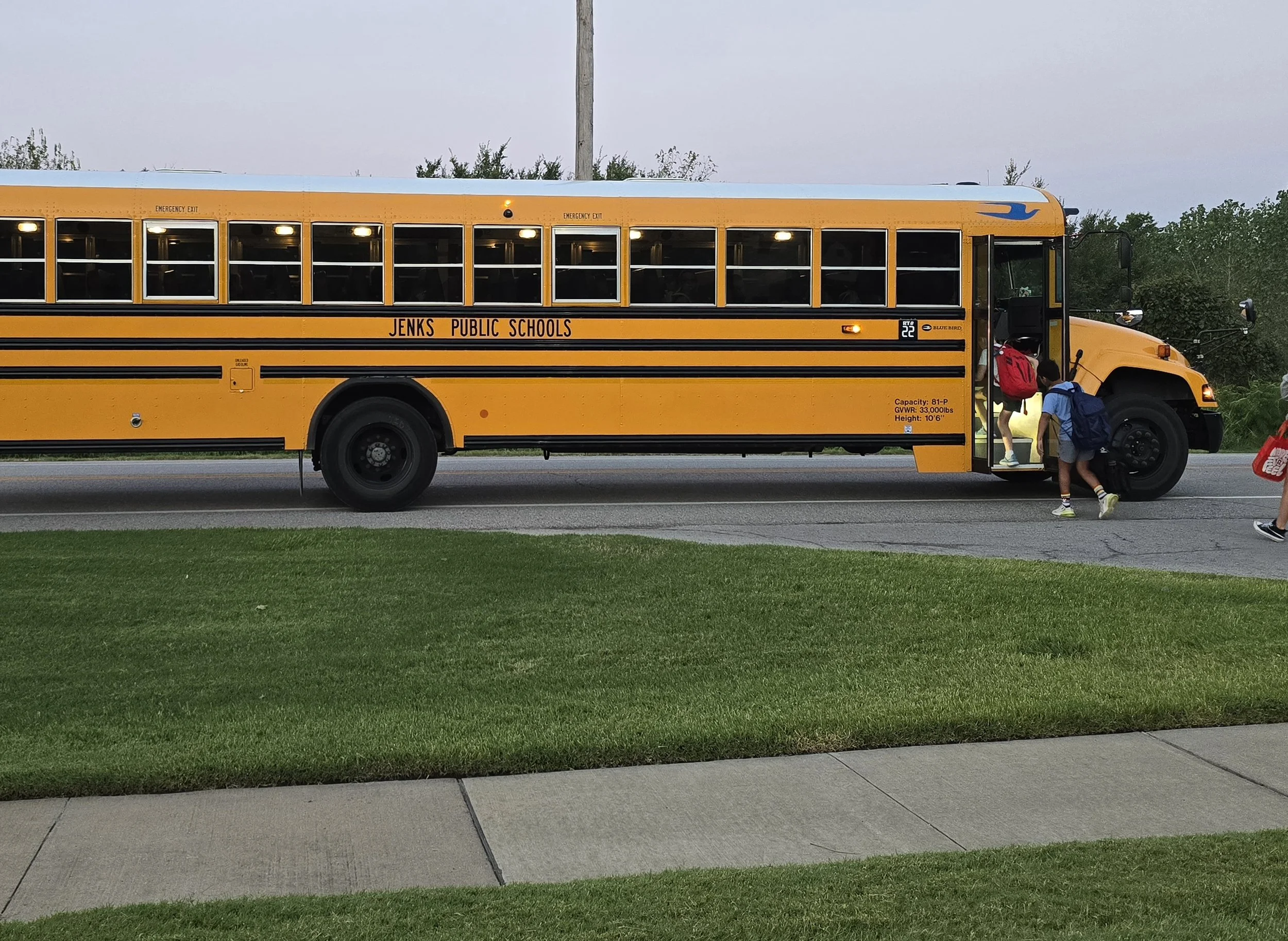
The unexpected right turn was no mistake, but rather the mandate of the Transportation Department, designed to address ongoing shortages for bus drivers and the rising cost of fuel.
“I got more kids because there weren’t enough buses, thus giving me a new route,” said Tori Harding, a Driver for Bus #28.
These changes in timings create a major gap in the lives of both students and transportation staff, which can be of great exasperation when persisting too long.
The Transportation Department created these changes believing that they are more efficient despite the minor discomfort faced by students every day. Some students however, complain that the discomforts aren’t so minor.
“Bro, my bus is so slow, I have to be a few minutes late for first hour, and by the time I get home, it's like 5:15, a full hour past school wasted,” says Reyansh Gupta, a Freshman.
Aside from that, there have been some construction projects followed by road hazards surrounding the Jenks Public Schools. The buses have to navigate through these blockages, keeping safe but with the great sacrifice of time.
On 91st Street, between Harvard and Yale, the City of Tulsa started a construction project with the goal of upgrading the old water system underground and building new pavement on top of that to ensure the safety of students who walk to the Jenks Campuses. To avoid any major troubles during the school year, they placed a few rules and regulations to keep things running somewhat smoothly.
“City of Tulsa is implementing a traffic plan ahead of the start of the school year to help improve access to Jenks East Intermediate and Jenks East Elementary,” states a post on the City of Tulsa website.
Considering the fact that many of these delays were expected and warned about, there were no major hiccups at the site.
According to the City of Tulsa’s website, “Drivers should expect delays during morning drop-offs, afternoon pick-ups, and after-school activities”.
The website specified that there would be delays in traffic for the Elementary and Intermediate campus activities, but never really mentioned how that would affect the Middle and High Schools.
“Buses from West Elementary and Intermediate may be delayed in completing afternoon routes, which could cause buses from the Middle and High School to run behind.” said an article written by Alexandra Sharfman for ABC’s Tulsa’s News Pulse.
The buses first left from the East sites where the construction was underway, which caused them to run a little behind schedule, just as prophesied. But this only accounted for the Elementary and Intermediate campuses, not for the Middle and High schools, some of which’ buses would be very late to come after making a trip to the West sides and then down here.
This, however, is not the only construction delay.
“The area that affects us the most is Elm Street between 111st and 121st,” says Daniel Walker, the Assistant Transportation Director.
The construction began in early 2025 to expand Elm Street from a 2-lane road to one with 5 lanes. The project workers are required to always keep one lane open and reduce the speed limit to keep control of traffic in the area. This creates some hiccups for buses that are dispatched on Elm both in the mornings and late afternoons.
Families also have concerns regarding the late arrival of students.
“At the end of the day, the kids should be back soon, do their work, and take rest. I just feel sorry that you have to take an extra hour of being so weary after school,” said Sharat Chandra, both of whose sons ride the bus.
Things must be looked up to, however, for on Fridays, the Early Dismissal of around 2 pm gives the buses enough time to recuperate after completing their first route, and then moving on to the later hours. This is why at the end of the week, most of the buses are on the predicted schedule, and students are comparatively early to get home by a slight margin.
There is also the sinkhole that opened up a few years ago, taking part of a bus under it when it collapsed. This prompted the Department to move the bus pooling to the front of the Jenks Trojan Aquatic Center, but this didn’t really affect the timings or schedules of the buses in any drastic way.
Additional revisions have been made since last year; for example, the Transportation Department started using electronic tablets for bus drivers to find and follow routes instead of the physical maps they used last year. They are much more convenient, being able to help in tracking when and where students get off as well as speedily update routes of certain buses.
They are also working on getting air conditioning for buses that don’t already have it.
“For air conditioning right now, we have funding for 21 buses,” says Walker.
The Director also says that 2 new routes have been added, mainly for the High School and Middle School. This is because the maximum capacity of a bus is 81, so 3 students per seat, but it's obviously a little difficult to keep this up as high schoolers, us being bigger and older than the lower grade schools, so when the Department found the opportunity, they managed to place a little more diversity in bus routes and make it more comfortable for students.
In the end, this is just a great acclimatization, an attunement to the many changes happening in our community. One day, the changes will be placed, and will test our faith, our belief that things will get better soon, once they are given the proper treatment.
This has been an informative update on the various things that the JPS Transportation System has put in place to make this year better than the last.
Walker says, “ Overall, it’s been going pretty smooth, although there is always room for improvement and things to be ironed out, but I believe that it should be this way for a couple of years, and I think we’re headed in the right direction.”