Follow the Money: Why Oklahoma is Restricting Renewable Energy
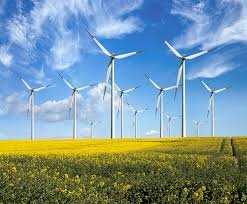
Photo Credit: Scientific American
By: Olivia Cannon
I've always been an outside kid; for as long as I can remember, I preferred to spend every possible moment outdoors. This never really changed: whether I'm sitting on the back porch doing homework, running down a trail, or backpacking through the woods, I spend as much time as I possibly can in the fresh air. To me, it always seemed that no matter what problem you are dealing with, you can feel just a little better when you are outside. It always brought me a tiny sense of peace, no matter the circumstances.
As I got older, I turned into a teenager with probably too many opinions, a knack for arguing, and a love for researching. It should come as no surprise that I began to realize the impact that people left on this planet, and angrily began fighting against it with possibly too much energy. Whether it be telling my peers again and again the impacts of AI to our ecosystems (seriously guys, don't be lazy, use your brains not AI), switching to buying pretty much all of my clothes secondhand, because there is enough clothes on this planet and they just get thrown away, or even just me yelling at my brothers every time I catch him throwing away something that belongs in the recycling. It was clear to me that I wanted to stop making as big an impact on our planet and to educate others on how they can make less of an impact. So now to the part we have all been waiting for: I was told I get to write an Editorial, which is perfect because, as you can tell, I love to give my unwanted advice. Immediately, the only thing I can think of is an article I read weeks ago: “The Growing Push to Ban Renewable Energy in Oklahoma”.
Now, like most articles’ headlines, this is partially clickbait. Oklahoma is not completely banning renewable energy; it is restricting it, but we will get to that later. Let's first make sure we are all on the same page, and understand exactly what renewable energy is, and what they mean when they say renewable energy. The Oxford Dictionary's definition for renewable energy is “Energy from a source that is not depleted when used, such as wind or solar power.” However, this is not exactly what the article is talking about. Oklahoma is not putting a “ban” or restriction on the use of renewable energy; they are putting the bans on the sources that these come from, such as solar panels and wind turbines, as well as battery storage and hydrogen storage plants, which are used to store extra energy for days when it is not windy or sunny.
Now moving on to more specifically what is actually going on, let’s get into what bills have been passed and what their plans are for the future. There are five bills that have been passed, and two that have been proposed and are waiting to be voted on.
This is the first bill, passed on April 28th, 2025, and signed by Governor Kevin Stitt on May 3rd, 2025. It requires that the contract between the landowners and the solar companies include that the companies will remove all equipment when they are done using it. The companies also have to prove that they have the money set aside to be able to clean up in case they go bankrupt.
This bill was passed by the House on May 1st, 2025, and signed by the Governor on May 9th. This bill gets rid of section 2357.32B of Oklahoma's tax code, which gave tax cuts to manufacturers who built “advanced small wind turbines in Oklahoma”. The reason they said they got rid of the tax cut is that the industry is mature enough now, so it no longer needs tax cuts.
This bill was passed on May 19th and signed by the Governor on May 22nd. This bill prevents Electric companies from being able to offer rebates, discounts, or special deals to convince customers to switch their appliances from natural gas to electricity. The reason the bill's author, Senator Grant Green, said that we need this bill is that it is not fair for electric companies to be able to use their money to “attack” other industries (meaning the gas industry), and that utility companies should not be allowed to “manipulate the market.” It should instead be up to the customers if they want to switch. However, there is nothing preventing gas companies from doing the same thing. In fact, according to their own website, Oklahoma Natural Gas is offering “$1,100 rebate for replacing an electric water heater with a new natural gas tankless water heater,” “$250 rebate for the purchase of a tankless or condensing water heater with a Uniform Energy Factor of .80 or higher,” or “$850 rebate for replacing an electric water heater with a new natural gas water heater”.
This bill was passed on May 28th and signed on June 9th. It amends Title 27, Section 7 of the Oklahoma Statutes. The law that is being amended gave electric and gas companies the power of eminent domain, meaning that the landowner is forced to sell their land if it is for a purpose that serves the public good (Ex, highways or power lines). The companies are also required to buy the land at “just composition.” The Bartolona McGuire Civil Trial Lawyers define just compensation as “Property owners should receive payment equal to the full and fair market value of their property.” This is not just a payment for the land; it also includes payment if other parts of their property are damaged, a relocation payment if the landowner is forced to move, and payment that will cover any lost income caused. This bill prevents only electric companies from being able to use eminent domain, but still allows natural gas companies to do so.
This bill has not been passed yet and will be voted on sometime in February or March of 2026. This bill, if signed, would place a "moratorium," meaning a ban on the construction and expansion of wind and solar energy facilities. This bill would also ban the permitting of renewable energy facilities, essentially making it illegal for both wind and solar plants to be able to build new plants.
HB 1451: This bill has not been passed yet and will be voted on sometime in February or March of 2026. This bill creates a “no build zone” for wind and solar plants within 1.5 nautical miles (about 1.7 miles) of any airport, public school, or hospital, and 3 nautical miles (about 3.5 miles) from any "non-participating" property line, meaning a neighbor who hasn't signed a deal with the energy company. In a press conference over HB 1451, KGOU quoted Senator Lonnie Paxton saying “Half a mile pretty well bans the industry, if you really think about it, if you have a section of land, in order to be half a mile away from anybody else's land, you’d have to own a big enough section and put the wind turbine directly in the center of it.” Senator Paxton explains that if this restriction is signed into place, it would make it extremely difficult for renewable energy companies to expand, especially with the other bills like HB 2752, which already prevent them from using Eminent Domain.
After seeing the kinds of bills that have already been signed, making it significantly harder for renewable energy companies to get land, putting unnecessary restrictions on them, or entirely banning the construction of their facilities, it is clear that the government is trying to hurt the renewable energy industry and is trying to get us to lean further into the natural gas and oil industry. To many people, this might be a surprise, because as I learned in the fourth-grade, renewable energy is significantly better for the environment than both natural gas and oil, but in case you were in a different fourth-grade class than me, I will quickly compare their effects on the environment.
Emissions:
According to Artisan Electric, over 30% of the greenhouse gas created in the U.S. is from turning Natural gas into energy, but renewable energy creates no carbon emissions in the energy-making process. Showing that natural gas pollutes the environment at an insanely high rate, as compared to Renewable energy, which does not cause greenhouse gas.
Water:
The Water Footprint Calculator said, “Conventional power plants consume so much water because it’s needed first for steam to spin turbines, and then, to cool that steam and return it to liquid water. A huge, overwhelming majority of the water withdrawn and consumed goes towards the cooling process. Renewable power requires plenty of water to manufacture and assemble the technology, but very little to operate in comparison to conventional power,” showing that in the long run natural gas uses significantly more water than will have to be taken from the ponds and rivers in Oklahoma in order to run their machines, harming our aquatic ecosystems and causing a strain on our water systems.
Land:
While it is true that renewable energy takes up ten times as much room as natural gas plants, Brookings found that 98% of the land they take up can still be used for farming, animal grazing, or other productive uses. Although Natural gas plants are smaller, the Union of Concerned Scientists showed that “The construction and land disturbance required for oil and gas drilling can alter land use and harm local ecosystems by causing erosion and fragmenting wildlife habitats and migration patterns,” This shows that while renewable energy takes up more room the land can still be used but natural gas plants damage the environment and leave it unusable.
So based on these facts and many more, renewable energy is clearly the better option because natural gas pollutes our air, steals our water, and poisons the land, all of which renewable energy does not do. It is clear to me, like it should be to you, that renewable energy is the better option. It keeps our ecosystems safe and keeps us healthy, so I want an abolishment of these bills because they do not put the safety of Oklahoma's people first; instead, they risk our health and safety.
I know some of you might be thinking, ‘that is the end right there, great editorial, I totally agree,’ but some of you are definitely thinking, ‘Olivia, you are a seventeen-year-old. You don't know how the world works. If the government made a decision that looks bad, there is probably a reason, and you would be right. There are reasons, and it would be unfair if we did not look at this decision from both sides, so let's go over some of the reasons they gave for these bills.
Property Rights and Land Owner Protection:
This is the most common reason that people use to defend the bills. They argue that private companies are building on our local farmers' land and claim they are protecting “the little guy” from big companies. However, from the way that I see it, if they were really worried about energy companies building on local farmers' land, they would not be only banning the renewable energy companies, they would also be banning the natural gas companies, and as we discussed above, the natural gas companies are significantly worse for the farmers' land. This argument seems false because if the local farmers need protection from anyone building on their land, it would be the natural gas companies, but instead of preventing them from poisoning Oklahoma's land, the bills only target natural gas companies.
Grid Reliability:
Another argument lawmakers are using is that renewable energy is weather-dependent, meaning they won't be creating energy if it is not windy or sunny, so they can not be trusted to keep the lights on. However, this is not true; the lights will not just turn off when the sun goes down. Renewable energy plants have batteries that store energy. According to Cleanview, as of 2026, Oklahoma currently has “four utility-scale battery storage projects in active operation,” which can hold 180 MW, and it has 76 battery storage facilities for wind energy already in development, which will be able to store 11,186 MW. This is enough to power the entire state for around five hours with absolutely no wind. As someone who has lived in Oklahoma almost my entire life, it is not always the windiest of places, but with these new bills, they will not be able to build enough wind plants to do this anyway. Another reason this is not true is that Oklahoma is currently fourth in the nation for renewable energy, where last year, around 45% of energy used in our state came from renewable sources. If renewable energy were truly unreliable, it would not be able to provide for nearly half of the state's energy, especially when the 180 MW that our batteries can currently hold. In the case of zero wind, the batteries could only keep 2% of the state running for four hours. This shows that even with the small amount our current batteries can hold, wind energy still provides a significant amount of energy used in 2025, meaning it is not unreliable.
Preference:
The final argument that lawmakers gave for these bills is that Oklahoma has a preference for natural gas, they are claiming that natural gas is the traditional way that has supported us for a long time and that these bills help those natural gas companies a “level playing field for reliable natural gas generation to outshine federally subsidized renewable resources” the law makers that claim this as a reason try to paint renewable energy as “insanity” and are directly attacking renewable energy.
At this point, you are probably realizing that the reasons they gave for making these bills don't seem to be that true, so obviously, there must be another reason, and that reason is money. The natural gas companies and the Republican Party of Oklahoma have a multi-million dollar partnership, which is the foundation of the state's political funding. During the 2024 election cycle, the oil and gas industry was the largest single sector donor in Oklahoma, donating more money than almost every other interest group combined. This “sponsorship” is done through political action committees and trade groups like The Petroleum Alliance of Oklahoma, which grades lawmakers on their “loyalty” to traditional energy. According to OneSecrets and state ethics data, fossil fuel interests donated $25 million to republican candidates and conservation groups during the last election. For lawmakers like Rep. Trey Caldwell and Rep. Jim Shaw (the people at the root of these bills), this financial backing gives them the incentive to protect the oil and gas companies, which often results in legislation like SB:460, which declares natural gas our state's "preferred" fuel source.
The amount of money that the natural gas companies donate and the blatant lobbying make it clear that these restrictions on renewable energy sources are not done with the thought of benefiting Oklahoma's citizens; they are made with the intent to protect the people who are giving them money. While the government is letting the rich big gas companies influence our legislation, our air will be polluted, our lands will be poisoned, and the people of Oklahoma will suffer because our legislators care more about money than the citizens they are supposed to represent.
To sum everything up, Oklahoma legislators are making it close to impossible for renewable energy companies to get land. They are putting unfair restrictions on them, and they are entirely banning the construction of their facilities in order to benefit the oil and gas industry. Despite all the facts that have proven that the gas and oil industry negatively affect our environment in ways that renewable sources do not, representatives chose to side with the people giving them money. I personally believe that it is unsafe and illogical to allow a representative to be bought off by big companies, and I think that we need to get rid of the restrictions that have been placed on renewable energy sources because the safety of our planet and our people should always be more important than money. Like my great friend the lorax once said, “When the last tree has been cut down, the last fish has been caught, and the last stream has been poisoned, you will realize you can not eat money.”