Islamic Society of Tulsa Faces Broken Arrow in a Lawsuit For Religious Rights Violations
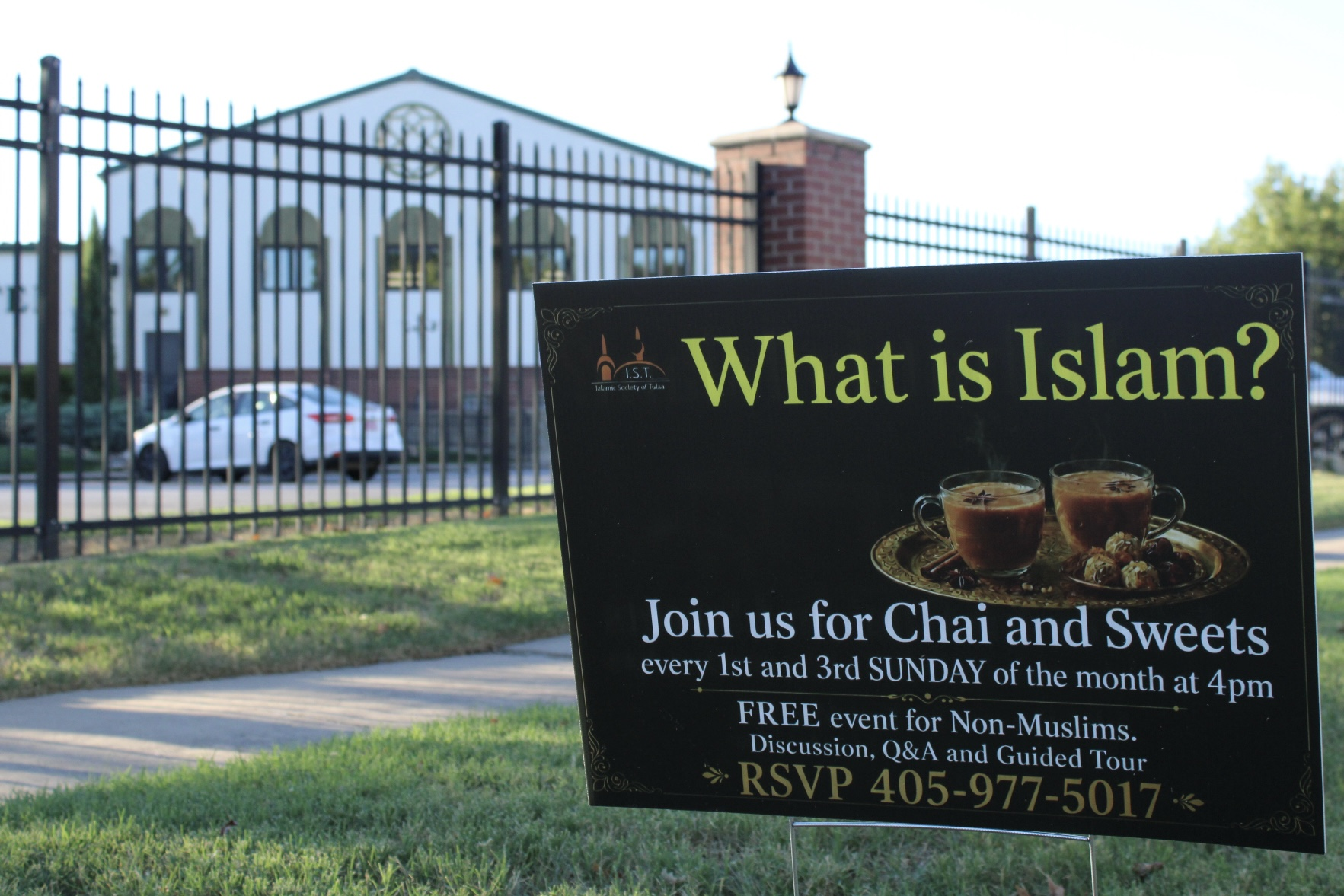
Boards set up around the Islamic Society of Tulsa mosque, inviting people to learn about Islam.
By: Mikail Khan
In January of this year, the Broken Arrow City Council denied the construction of a new mosque—the location of which would’ve been convenient for Jenks High School students trying to make Friday prayers—based purely on the required land-use standards. Emails uncovered in an investigation after the vote revealed Islamophobic rhetoric shared between council members before the case was ever heard. Accusations of religious bias in the vote snowballed into a lawsuit headed by the Council of American Islamic Relations (CAIR) partnered with the Islamic Society of Tulsa (IST), against the Broken Arrow City council.
For years, the IST mosque has been the leading mosque in the Tulsa area, hosting community events and religious celebrations. The expanding community prompted IST to buy 15 acres of land and create plans for a new mosque (masjid in Arabic) and commercial complex, but when seeking a rezoning application to be able to build a medical clinic, food pantry, and retail spaces on the area currently designated as agricultural land, their application was denied by a 4-1 vote based on land use requirements.
The Islamophobic emails uncovered between council members and residents later revealed the possibility of ulterior motives for the vote. When CAIR, which had already been keeping an eye on BA after the controversial vote, heard of the Tulsa Flyer’s discovery, it sent its lawyers to partner with IST and file a lawsuit in August 2026 over violations of religious land-use rights.
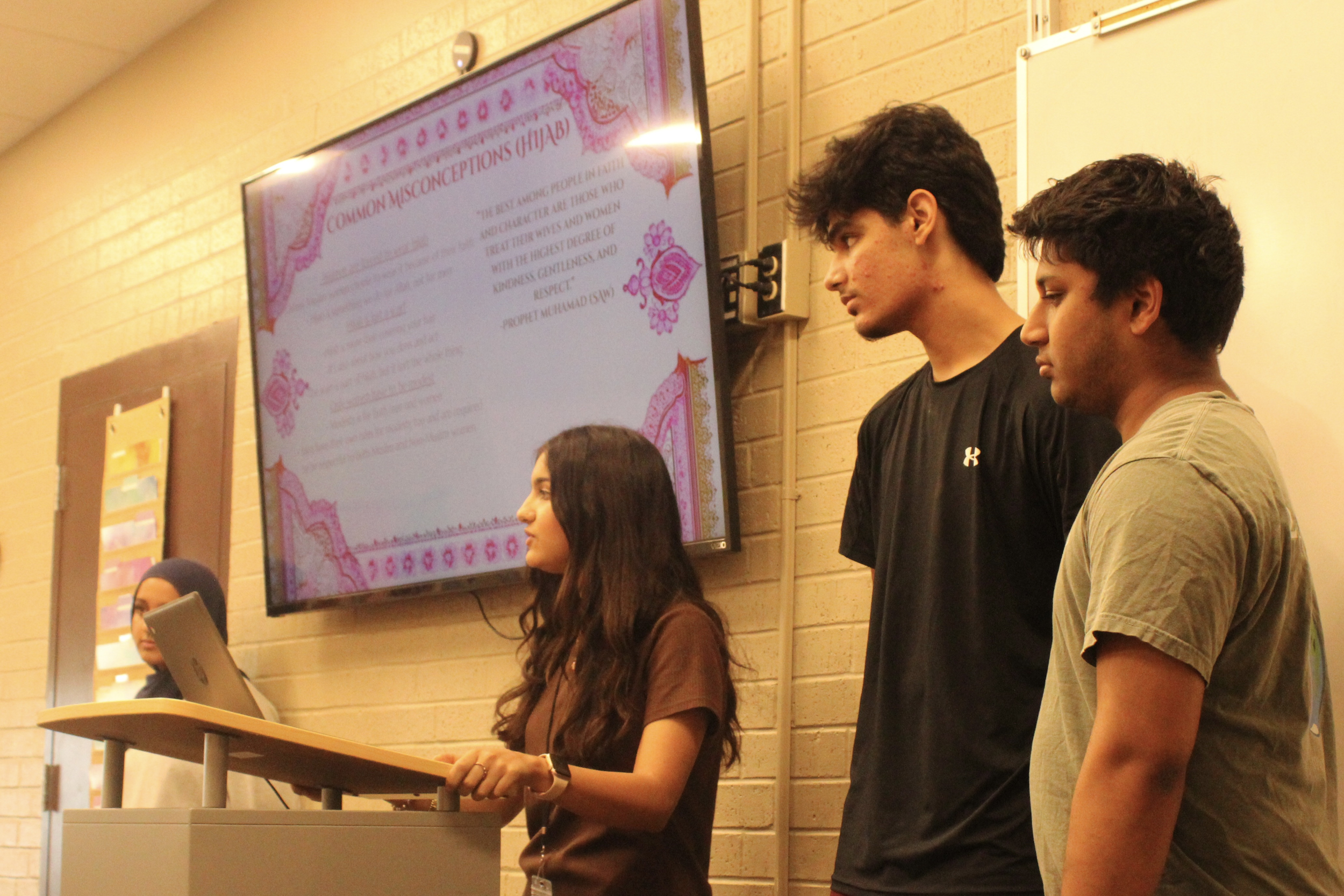
Jenks High School Muslim Students Association officers—including Saad Khan—teaching students about the common misconceptions about Islam at their first meeting.
“I’ve been going to the IST masjid for several years,” claims Saad Khan, a Jenks varsity basketball player and Muslim Students Association officer. “It’s where I attend Friday prayers, religious programs, community events, and it’s a really big part of my life.”
Jenks High School is home to many Muslim students stemming from all sides of the world, from children of immigrants from places like Pakistan and Sri Lanka to Afghani refugees who feel more comfortable in communities with people of similar values and who speak their native language.
Programs and clubs at JHS like the International Scholars Program and MSA provide spaces for like-minded people, but outside of school, Muslim students find a home at IST. The IST mosque helps them stay close to their religion–attending Friday prayers and making friends in the Muslim community.
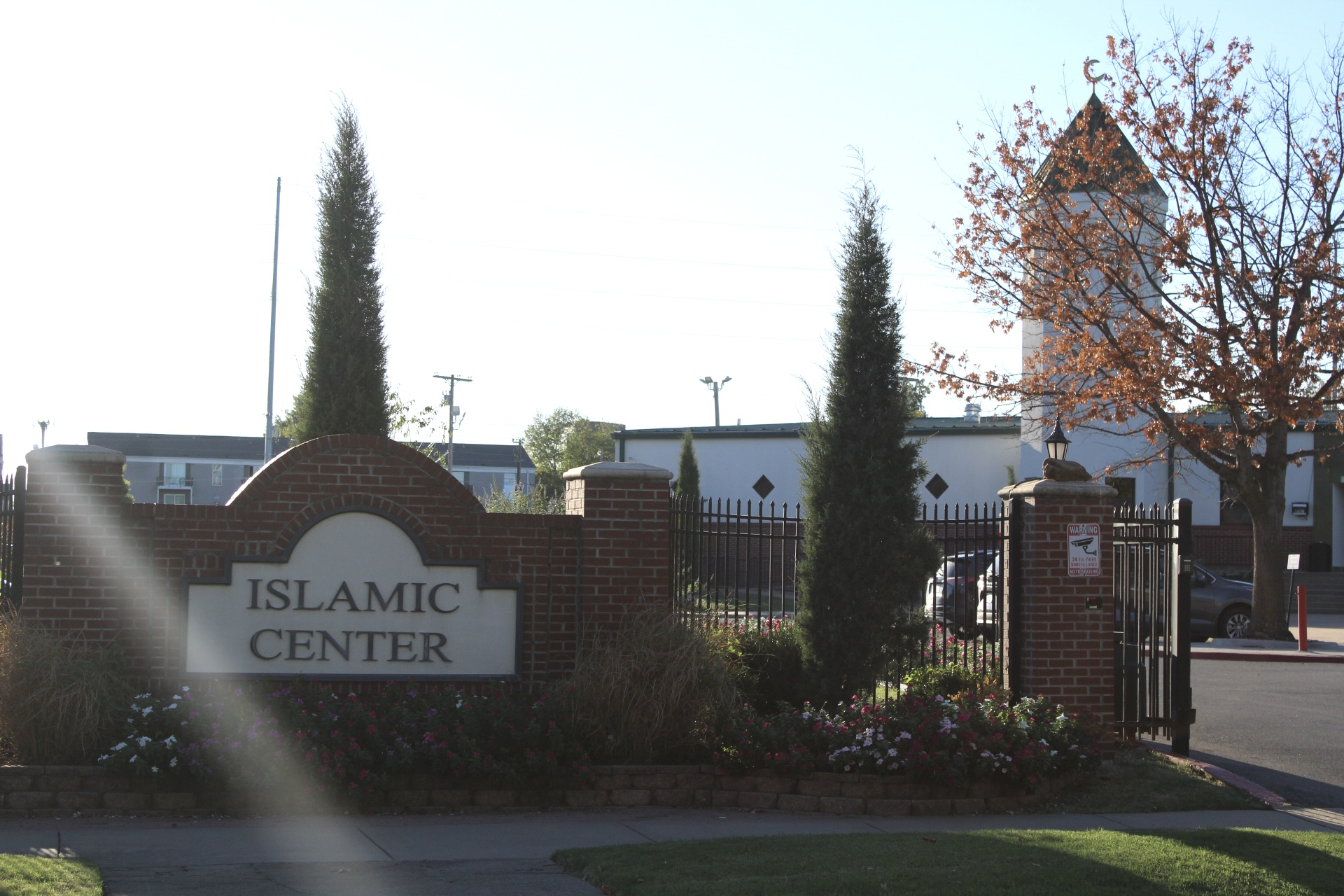
The front entrance of the Islamic Society of Tulsa mosque.
“It’s kind of stressful sometimes because I have to leave school early,” said Khan, speaking on the process of making it to Friday prayers during the school day. “Traffic at the masjid on Fridays is really heavy sometimes, which can cause me to miss most of my classes and makes it harder for me to get back to school on time.”
The drive between JHS and the mosque has compounded with distance and long-term construction on highways, extending the drive to around 30 minutes for students like Khan. With around 1,200 Muslims split between two time slots at one location for Friday prayers according to IST, the parking lot often fills to the brim and parked cars leak into the surrounding residential areas, leading to complaints from homeowners and traffic jams when the prayers are over.
“I was really excited when I heard that there would be a closer masjid to us,” recounted Khan. “I’d be able to go every single Friday and not miss any important lessons or anything because I’d be able to make it back in time.”
The proposal of this new mosque creates new opportunities for Jenks students devoted to their faith and the overall Tulsa community. Along with the introduction of block schedules, Jenks students will miss less school and be able to be more engaged in their classes. The center would also provide retail shops and a medical center open to the entire Tulsa community. The realization of these opportunities all hangs on the success of CAIR’s lawyers in the lawsuit.