Is Block Schedule a Bust?
By Emma Carroll
Has the block schedule lived up to our expectations? Block schedule has been a hot topic in the past months. Jenks students have openly shared their opinions on block schedule from the moment it was announced. And many of the responses were negative, but is it as bad as people decided it would be? This month, I interviewed teachers and students alike to find the first impressions of the block schedule.
Block schedule is a common argument for schools on its effectiveness and sustainability. It offers many positives, such as longer class time, an introduction to a college schedule, and fewer daily transitions. It also brings a number of negatives, such as student procrastination, a gap between classes, and absences being harder to recover from. However, some negatives that have happened at Jenks this year may just be from it being the transition year.
“Trying to figure out what content could be sacrificed without us losing the skill development that's requisite in each of my courses,” said Kody Engle, a history teacher. He was going over what he did to prepare lessons for the 26-27 school year.
Planning for the new school year was the beginning of changes. When planning, there is only so much you can anticipate, so lesson plans are subject to change as the responses of the students come in with every lesson.
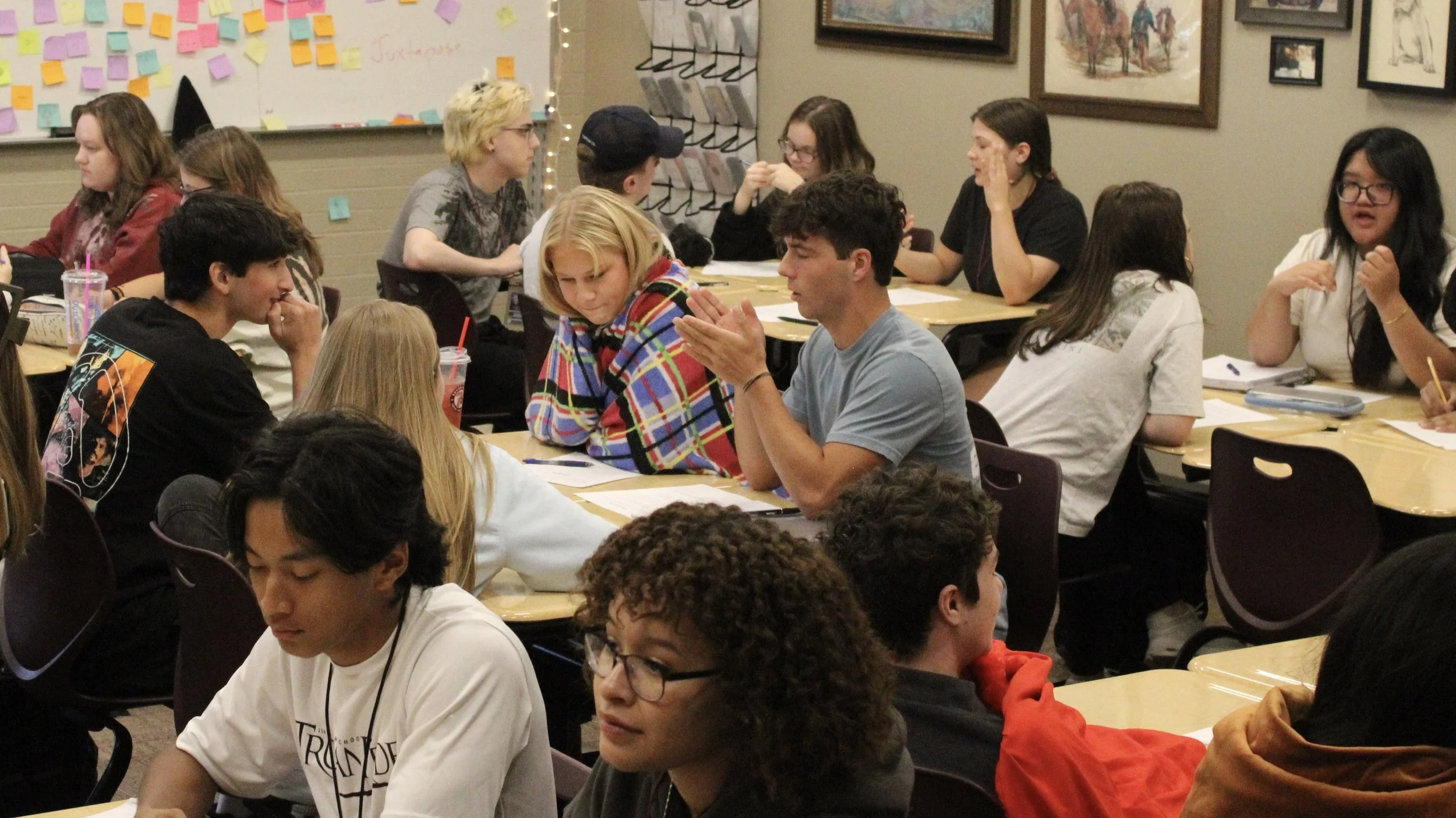
Mr. McCown's AP Literature and Composition class engages in discussions over whether to speak or die.
“The plan I laid out over the spring and last summer, I've already had to kind of massage that and change it,” said Engle, “just based on where students' stamina habits are within a class period.”
One major issue for students this year has been stamina. With a new schedule, some students have found that sitting through a longer class period is harder. Everyone in the high school knew the 6-period day with 50-minute classes, or the 7-period day with 48-minute classes from the middle school. So the transition to 90-minute classes has been hard for some.
Teachers are working to find the best way to structure each class in order to keep students engaged while still covering all the material. Students are also adapting their learning to fit the condensed learning days.
For David Lawrence, a freshman biology teacher, the lesson plan for each day is subject to change according to how the students seem to be engaged. On days with longer lectures, he allows time for a brain break if the students need it. For days with shorter lectures there is an accompanying activity, so students are engaged during the shorter lesson and able to continue being engaged through active participation.
However, even with great time management in class, each student is different, and some can still have issues with sitting through a longer class.
Picking classes that you enjoy is another big factor in how students engage, said Inara Vo, a Jenks High School senior. Before block schedule, having a class that you did not enjoy as much was less of an issue for keeping attention. You only had to focus for less than an hour. However, since more content is being covered in one day, keeping students' attention is much harder. As the year progresses, there is a good chance that students will be able to adapt and retain information from the long lecture days.
Though there are struggles that come with adapting to the block schedule, the positives have started to show.
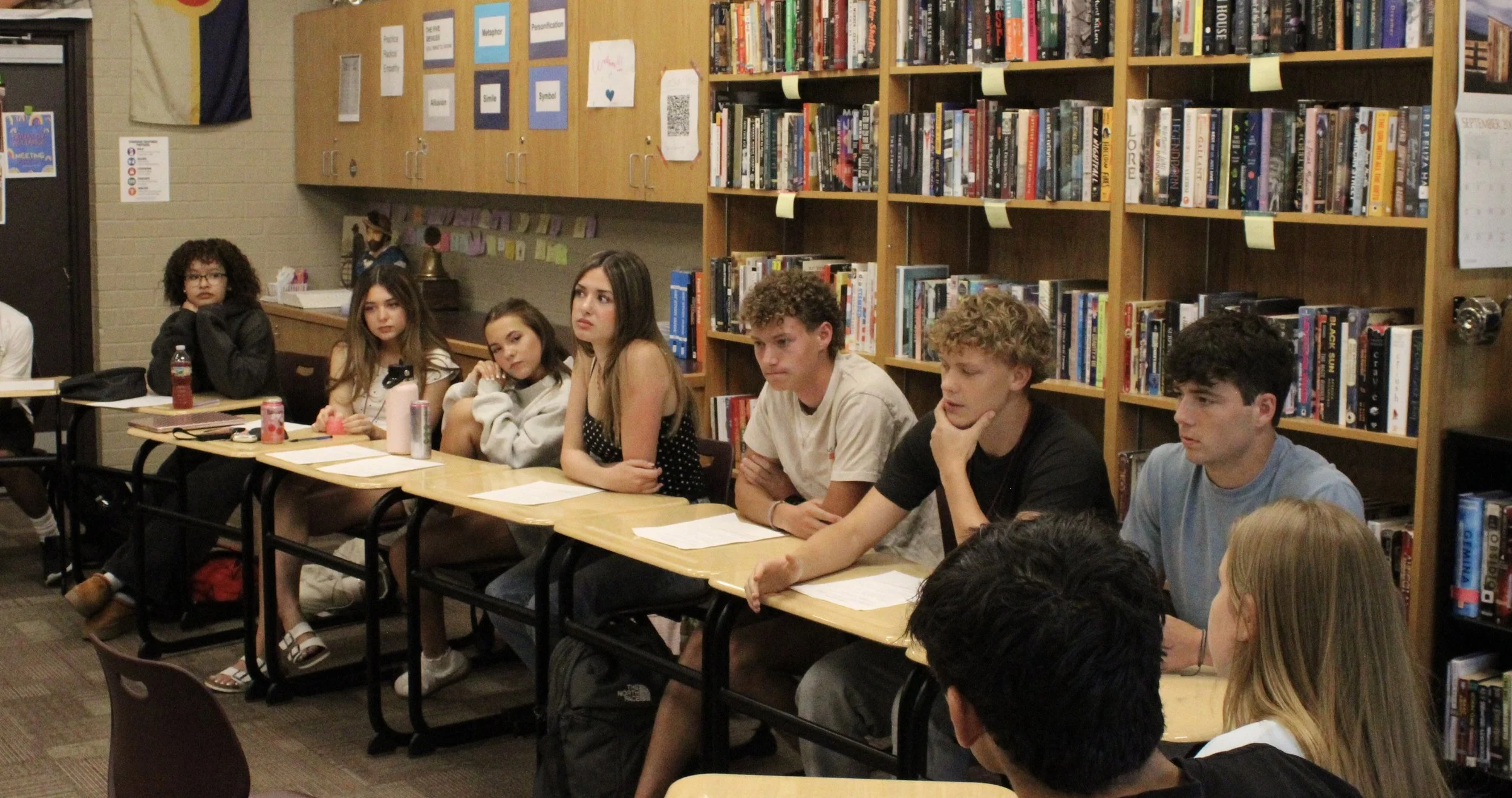
Mr. McCown's AP Lit class students used their small group discussions to kick start the larger discussion.
The block schedule has improved student internships and music classes, according to Vo. The longer periods allow for more work to be done at internships, travel time to the internship is less stressful, and better preparation for post-high school plans.
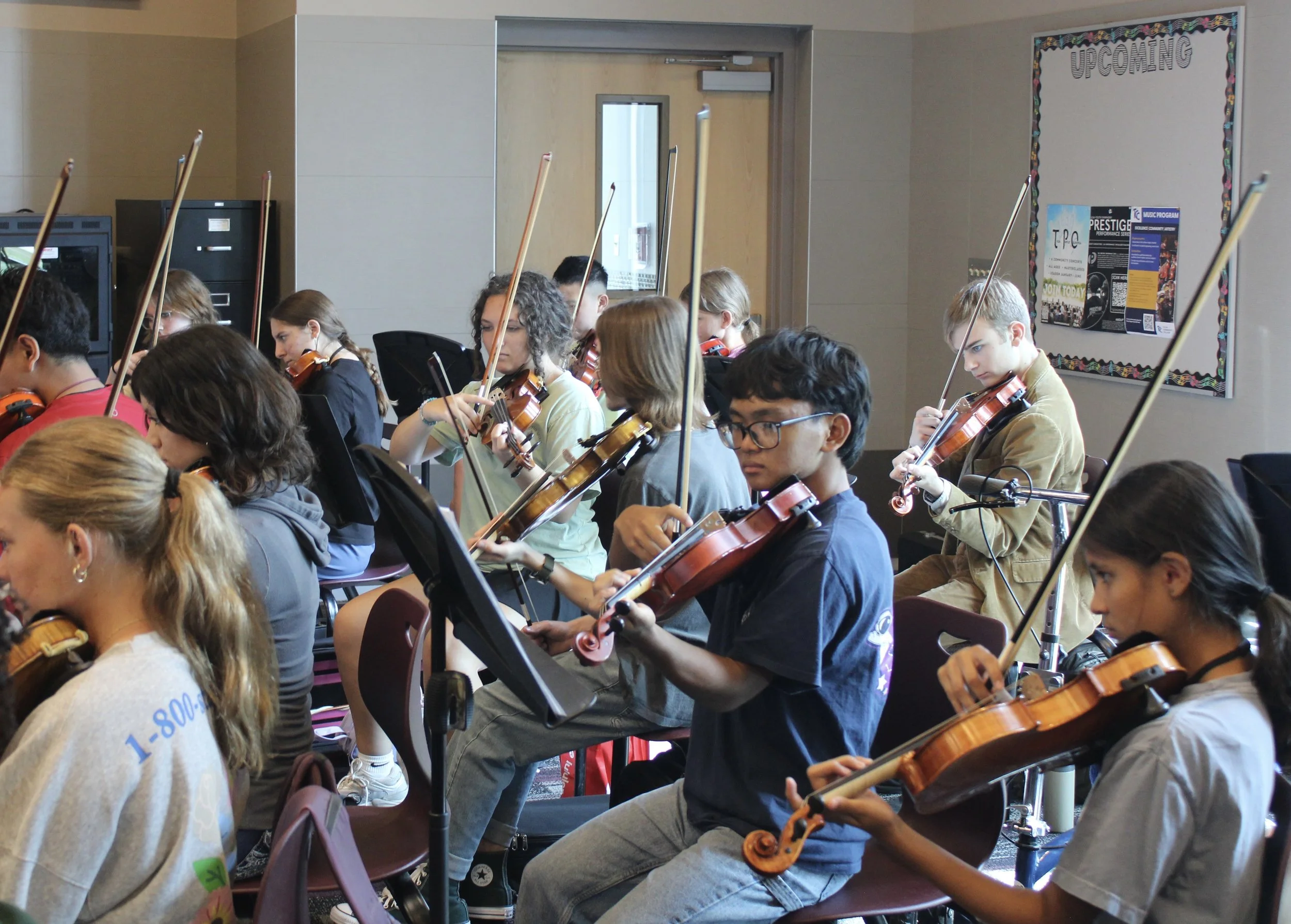
Similarly, the longer periods in music also help prepare students for their future. In professional music settings, rehearsals are often 2 hours or more, so music students are able to experience a more realistic rehearsal time. Professional settings often meet once a week which also helps those who wish to continue their music education.
“I was excited about it because it was a longer time to do labs,” said Lawrence.
For science classes, the 90 minutes allows for labs to be done in one day, as opposed to split over multiple days as it often was before. This allows for skills and lessons to be applied in a more fun and hands-on approach, without the interruptions. The 90 minutes allows for more activities to be done in non-science class too.
For AP classes that have free-response sections that last for more than 50 minutes, for example, the Document Based Question as well as the science and math FRQs, teachers are now able to test the material exactly how it is presented on the exams in May. We may see this opportunity help students who are taking AP classes once they take the exam.
The block schedule also helps prepare students for college. The block schedule is similar to a college class schedule, said Lawrence. Having students experience long periods of learning followed by a gap between meetings and extended group discussions can be very beneficial if students decide to pursue higher education. Having students learn how to study in this type of education style can make their transition from high school to college much easier. Similarly, learning how to effectively speak in both small group and large group discussions, and how to actively listen, can help students going into higher education or straight into a job.
Overall, the block schedule has not been as bad as people predicted. Many of the issues that have come up have been merely from transition, so as the Jenks High School community works together to figure out how to operate with a new schedule, many of these issues will resolve. Once we get the hang of it, the benefits will resonate.