The MOST Underrated Trilogy: Pirates of the Caribbean
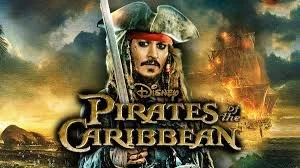
Photo Credit: Pirates of the Caribbean movies in order
By: Ethan Adkins
Imagine with me, if you will—it is a dark December night. You’re snowed in at your house, and you’re looking for something brand new to watch. Now let me introduce you to three movies that will change your life forever: Pirates of the Caribbean: Curse of the Black Pearl, Dead Man’s Chest, and At World’s End.
Since I was a little kid, I have loved these movies. To me, these movies have always meant something special. Whether that’s just an escape from reality to secretly fulfilling my desires of being a sea-barring pirate, these movies have always had a special place in my heart. So, as we enter a long and cold December, let me try to convince you that these movies are the most underrated trilogy and that they’re worth binge-watching when we hit that long Christmas break.
My criteria for this will be based on the story (while trying not to give too much away), music, characters, the overall fun experience these movies bring, and discuss notable scenes from each.
Spoiler Warning Ahead.
Curse of the Black Pearl
The first entry in the series follows Captain Jack Sparrow, played by Johnny Depp, and William Turner, played by Orlando Bloom, as they set out on a quest to save his love interest, Elizabeth Swan, played by Keira Knightley, and get Sparrow his ship back from the capture of Captain Barbossa. Along the way, the group gets tied up in Barbossa’s plot to lift an ancient Aztec curse that makes them unable to die and even turns them into skeletons in the moonlight. The movie climaxes with a battle in a cave where Sparrow and the gang defeat Barbossa, lifting the curse and setting Swan free from capture.
The plot, while semi-basic in its nature, allows for strong performances from its cast. Johnny Depp is an absolute star in this film. He gives Captain Sparrow both a feeling of “he has absolutely no idea what he is doing,” and yet, at the same time, makes him feel like the best and smartest pirate in the movie. The villain in this film, Captain Barbossa, played by Geoffrey Rush, is a worthy foe. It always feels like he’s one step ahead of Sparrow and Turner, even if by the result of their mess-ups. Barbossa, to me, fits what I’d imagine an evil pirate would be, and Rush executes his role perfectly.
Last but not least, the performances from Orlando Bloom and Keira Knightley. They both give great performances; however, Knightley definitely gives a slightly weaker performance, but that’s not particularly her fault. In the first installment, Elizabeth Swan is way more of the stereotypical love interest with some badass qualities. As we go on within the trilogy, though, her character gets to develop way more, and she becomes an awesome character. Bloom as Turner is just as good as Depp as Sparrow. He gives a good balance in the movie where Sparrow is the pirate brain, selfish and him-oriented. Turner is more concerned with helping the people he cares about. He also gives some great action in this movie, but we’ll talk about that when we get to my favorite scenes from the movie.
One thing I can confidently say about each of the movies that are just amazing is its soundtrack. The score was composed by Klaus Badelt, and he is responsible for maybe the most recognized theme outside of Star Wars, “He’s a Pirate.” Some other highlighted tracks for me are “Fog Bound,” “The Medallion Calls,” and “To the Pirates’ Cave.” Badelt does an excellent job at bringing the feelings of an epic pirate adventure and putting it into sound form. Since I watched this movie for the first time as a child, I always remember putting the soundtrack on when my friends and I would play pirates. The score captures that childish spirit deep within us and brings it out, where, when you hear the music, you can’t help but smile.
This film has some extremely fun scenes. The action is amazing and brings excitement from just watching it; however, this movie holds the single greatest intro for a character in all of cinema. Sparrow’s intro scene perfectly sums up who he is as a pirate. As he arrives, his small dinghy boat slowly sinks as he stands on top. What makes this scene so good is a mixture of music, the setting, and the situation. I suggest watching it here.
Another great scene this movie has to offer is its first sword fight. It takes place right after Sparrow’s intro at Turner’s job where he makes swords. One thing this series does very, very well is its action scenes. You always feel on the edge of your chair; the amount of awe you’re in is incredible. The thing that makes the scene so amazing is its choreography. The way the two interact during this scene is incredible. Once again, I suggest watching the scene here.
The last scene I’d like to highlight is the final confrontation between Sparrow and Barbossa. This scene was built up throughout the movie. We all knew it was going to end with a sword fight between the two, and it didn’t disappoint. While the music made Sparrow’s intro and the choreography made the Sparrow vs. Turner fight, what makes this one so cool is its visuals. During this fight, we learn that Sparrow is also under the Aztec curse, which turns him into a skeleton. Meaning, as they fight through the moonlit cave, Sparrow and Barbossa are transforming back and forth between human and skeletons. Watch it here.
Dead Man’s Chest and At World’s End
You may be wondering, “Why am I talking about both films here at once?” Well, reader, the answer is both Dead Man’s Chest and At World’s End were filmed as one production. These movies are framed as part one and part two. The story, the characters, and the vibe of these two go in a different direction than the first one. Curse of the Black Pearl kept things more on the lighthearted side with some fun action adventure; however, these two films try to tell a more serious emotional story. While I believe these movies are criminally underrated, there is one strong critique I have always had with this movie. It’s what it does to Jack Sparrow’s character, but we’ll talk about that when we get to the performances segment.
Notably as well, the two films switch composers from the first. Hans Zimmer takes over the scoring role. He’s best known for his music in Interstellar, The Dark Knight Trilogy, and Inception. I’ll be honest as well, not to trash the composer of the last film, but Hans Zimmer takes the music of this film to a whole new level. I’ll explain more when we get to the music section.
I’m still going to talk about each movie as one while I review the story. Then, as we move into performances/characters, highlighted scenes, and the music, I’ll separate them out. Warning: the story section is a lot longer than the previous films. My explanation for this is that the film’s story, to me, is also impossible to get if I did just a short paragraph summary. Like I said previously, these two movies tell a more complex and emotional story that is a different vibe from the first one. This time, summarizing the story will have me include some major spoilers for the ending and plot points of the films, so once again, spoiler warning.
The movie opens on the wedding day of Will Turner and Elizabeth Swan. The events of the first movie have caught up to them, as helping Sparrow has made them enemies of the crown. This is when we’re introduced to one of the new villains in the movie, Cutler Beckett, played by Tom Hollander. He arrests both Turner and Swan but gives Turner an offer for their freedom. If he tracks down Sparrow and brings him both Turner and his compass, he will let them both have their freedom. This sets up the main dynamic between Sparrow, Turner, and Swan for the movie, but as always, things get more complicated.
When we first see Jack Sparrow, he has discovered a drawing of a key he wants to find. He doesn’t quite let the crew know what the key unlocks, but he gives the vibe that it’s a very valuable item. One night, as Sparrow is working late and the crew rests, he goes down into the lower decks to get a bottle of rum. However, in the darkness, he is met by his former crewmate before Barbossa stole the Black Pearl, Bootstrap Bill, Stellan Skarsgård. The character is also William’s father. He greets Sparrow with a simple phrase, “Time’s run out, Jack.” This is where we learn how Sparrow got the Black Pearl originally. He made a deal with Davy Jones that if he raised the ship from the bottom of the ocean, in 13 years, Sparrow would give him a lifetime of service to the Flying Dutchman. After warning Sparrow that Jones and his Kraken are coming for him, Sparrow is naturally frightened by this encounter and sends the ship into shallow waters.
We resume with William Turner sailing around searching for Sparrow when he finds the Pearl washed up on shore. He departs for the island, where he is surprised to discover that the ship is empty. While searching the nearby forest, he is knocked out and captured by a cannibal tribe that worships Jack as their leader. Turner gets thrown into a round cell made of bones dangling off a cliff with the rest of the Pearl’s crew, and they make their escape to get back to the boat. Meanwhile, Sparrow makes his own escape from the tribe. They are obviously very upset that their leader is escaping and chase him down the beach as he barely makes it back to the ship. Before I move on, while not one of my highlighted scenes from this movie, I suggest clicking this to watch the beach chase scene. The main reason I suggest watching it is because it has the famous Jack Sparrow goofy run.
While all of this is happening with Sparrow and Turner, Swan breaks free from Beckett’s capture, where she breaks into his office and threatens him to sign pardon papers as she departs to find Turner at Tortuga. Sparrow learns about Swan’s situation and that he needs his compass to set them free. Before anything happens, Sparrow and the crew pay a visit to an old friend to learn more about Sparrow’s situation. He goes upstream into a swamp where they meet Tia Dalma, played by Naomie Harris. She tells them the story of Davy Jones, played by Bill Nighy. A long time ago, he was in love and cut his own heart out and locked it away to prevent heartbreak. Along with the story, they are also told Jones is unable to step on land. We also find out the key Sparrow is looking for is always on Jones.
Sparrow cuts a deal. If Will bargains with Jones for his soul, Sparrow will give him the compass. When Turner meets Jones for the first time, he learns Sparrow tricked him and now he is captured upon the Flying Dutchman. He then warns Sparrow that if he doesn’t collect 100 souls for him in three days, then Sparrow’s soul will be taken to a lifetime of service. Sparrow and the crew then head to Tortuga to collect 100 people to give to Jones so Sparrow doesn’t have to. There, he meets with Swan and a now disgraced Norrington, who returns to us in rough condition. Sparrow lies to Swan about Turner’s condition, and the crew sets out to go save him.
On the boat, Turner meets his father for the first time since he was a young boy. The two have a troubled relationship throughout the movie, but Turner does make a promise to save his father from the boat. Turner decides to challenge Jones to a gambling game for the chest key; however, his father intervenes, and they end up losing. However, Turner now knows the exact location of the key. Later that night, Bootstrap and Turner break into Jones’s organ room to steal the key. After successfully getting the key, Turner departs to the island where the chest is buried to get the chest to save his father.
The climax of the movie starts when Turner, the Flying Dutchman, and the Pearl all arrive at the island at the same time. Sparrow, Turner, Swan, and Norrington all find the chest when a huge three-way duel breaks out between the three men. At this time, the Flying Dutchman crew takes the island in hunt for the chest. As the duel calms down, Norrington notices the chest is unattended, too, and in a moment of fake heroicness, steals the heart and pretends to sacrifice himself to save Swan. This fact will become important a little later and in the next film.
As Sparrow, Turner, and Swan get back on the boat, they are able to outrun the Flying Dutchman but are unable to outrun the Kraken. At first, the crew tries to fight off the Kraken until they notice Sparrow jumped ship and rowed away in a dinghy. But in a last-moment change of heart, Sparrow comes back to save the crew. However, as the crew gets into the dinghy, Swan tricks Sparrow by kissing him and cuffs him to the Pearl, saying the beast isn’t after the boat; it’s after him. Turner sees the kiss but doesn’t say anything. Once again, this fact plays a larger part in At World’s End. The crew sails away as they watch the Kraken engulf Sparrow and the Pearl. Before we go back to the main crew, we see a short scene of Norrington handing the heart over to Beckett, meaning he is now the ruler of the seas.
The crew, without anywhere to go, returns to Tia for advice, and in their moment of despair, she asks them a strange question. Were they willing to go to World’s End to save Jack Sparrow? They all say yes, and she says this: “All right. But if you go and brave the weird and haunted shores at World’s End, then you’ll need a captain who knows those waters.” At that moment, Captain Barbossa walks out and says, “So tell me, what’s become of my ship?” as the screen cuts to black.
At World’s End begins not exactly where we left off. It starts in the port where Swan lives, called Port Royal, and we see a horrific sight. Since the end of the last one, Beckett is now going on a mass hanging of any and all people convicted of piracy. That brings us to a small boy, too short to even reach the noose, making the executioner supply a small box for him to stand on. Before he is hanged, he starts singing an original pirate shanty call, “Hoist the Colours.” We’ll talk about the song in the music section, but the music and scene set the mood immediately for the movie and show us what’s at stake for not just our characters but the world around them if they don’t stop Beckett and Jones from ruling the sea.
We catch back up with our main crew in Singapore as Swan and Barbossa talk to Captain Sao Feng. The captain of Singapore is in possession of the navigation chart to take them to Jones’s Locker at World’s End. Sao reveals that a spy had attempted to steal the charts earlier, and the spy turns out to be William Turner. Naturally, Sao is reluctant to help after they sent Turner in to steal the charts; however, Barbossa reminds him that the song has been sung and the Brethren Court must assemble, meaning all the Pirate Lords must convene at Shipwreck Cove. Before Sao can make any stable decision, the British Navy bursts in, and a large fight ensues, with Barbossa getting lent a ship and crew as well as the charts.
As the crew heads to the Locker, they first have to travel through an arctic region with frozen waters. A crewmate even loses a toe from how cold it is, but eventually they reach the end of the world, which appears to be a massive waterfall, and the boat and crew fall over the edge. We cut to Sparrow and him seeing hallucinations of himself being the crew. He decides to leave himself and go overboard, where he finds himself in a massive desert with nothing around but a small crab. As he turns to look around, suddenly more crabs have appeared and start to pick up the Black Pearl and move it. Sparrow, in a bit of a shock, runs after it. We find the crew washed up on shore without a way to get out of the Locker and no clue on which direction they should go to find Sparrow when suddenly they see the Black Pearl come up over the horizon, with Sparrow up by the crow’s nest, with the style and music being a callback to how he was introduced in The Curse of the Black Pearl.
The parties are now reunited; however, there are some harsh feelings between Sparrow and Swan due to her, in his mind, killing him. They’re now on the sea trying to find out how to escape when Jack notices some weird cipher on the charts that say, “Up is down.” We’ll both talk about this scene and its music in the later sections, but for now, Sparrow convinces the crew to flip the ship upside down. The boat, totally submerged, rises downward, and now they’re out of the Locker and back into the real world.
Sailing for a while, they land on an island and discover the dead corpse of the Kraken on the island. This is where we get into a conflict with Sparrow. While staring at the corpse, he and Barbossa talk about mortality, and Sparrow gets an idea. Whoever stabs the heart to defeat Jones gets to rule the Dutchman and the crew forever; however, you don’t get to step foot on land for 10 years. But for now, Seo Feng meets back up with the group and tells Sparrow an old friend wishes to speak with him. Sparrow and Beckett speak, where Beckett tells him he wants the compass so he can capture all the pirate lords at Shipwreck Cove. However, Sparrow makes a counter offer to just lead him there, to which Beckett agrees, too. Feng also wants Swan. Both parties set sail and make their way to Shipwreck Cove. On the way to the Cove, Feng’s ship is attacked by the Dutchman, ordered by Beckett, and Feng dies—not before making Swan captain and one of the pirate lords. However, she and the crew get captured by the Dutchman. Luckily, one James Norrington helps them escape, and she makes it to the Brethren Court meeting at Shipwreck Cove.
Before the meeting begins, Barbossa confronts Tia Dalma, in which it’s revealed she’s Calypso, and Barbossa has her locked in the brig. The court meeting begins, and it is pure chaos; no pirate lord can get anything done. To make a united front, the lords must elect a pirate king, but as per usual rules, each pirate votes for themselves—except for Sparrow, who votes for Swan. By popular vote, Swan is now the pirate king. This is where we start the climax of the film. The crews depart from Shipwreck Cove, and Barbossa sets Calypso free. Her powers bring in the stage for the final fight between the Black Pearl and the Flying Dutchman. She summons a maelstrom. This battle sequence is my second favorite battle in the whole series. It brings emotion, high stakes, and extremely fun visuals. The most important part of this scene to me is the end. Sparrow has the heart and is about to stab it to kill Jones; however, Jones stabs Turner straight in the heart, leaving Sparrow with an ultimatum: stab the heart and become Captain Jack Sparrow, the immortal pirate, or save Turner. In the end, Sparrow chooses to save his friend by taking Turner’s hand and stabbing the heart, saving his life. The final part of the battle takes place after the maelstrom closes. Turner, now the captain of the Flying Dutchman, and Sparrow join together to destroy Beckett, taking down his terror once and for all.
The movie ends with Turner and Swan embracing each other’s love on a beach before Will departs for 10 years. Sparrow sails off into the sunset searching for the Fountain of Youth, which actually would become the plot for the 4th film, but we don’t talk about that one.
Overall, these three films mean a lot to me. They enact that feeling of magic as an adventure while still giving good stories that have a good depth of emotion within them. However, getting to performances, my one gripe I have about the film is how they treat Jack Sparrow’s character. In the first movie, they treat Jack as a dumb but clever pirate, always showing some type of smarts, but in these two films, they made Sparrow way more goofy. He’s always being the butt of the joke and rarely takes himself seriously. When he does get taken seriously, he’s amazing. Not that any of this is ragging on Johnny Depp’s performance; he still does an outstanding job at playing the pirate, and while I wish the writers could’ve kept the clever pirate feel, they definitely gave more emotion to Sparrow as well, which fits really well with the two movies.
However, to me, the performance that takes the trophy is Bill Nighy as Jones. Everything that was evil about Barbarossa in the first is exemplified with Jones. He plays an evil, broken villain to the max. Whenever he’s on screen, he captures the scene not only with amazing CGI and design that still holds up today, but you actually feel for Jones in some scenes and understand why he went evil while still being tough and scary.
As mentioned before, Hans Zimmer takes the score from the first one and makes it look like child’s play. The songs “Jack Sparrow” and “Davy Jones” are highlights of Dead Man’s Chest. In particular, “Davy Jones” is a beautiful medley that perfectly encaptures what I meant when I talked about Jones’s character. It’s a beautiful lullaby with both the sense of love being broken as well as a villain organ theme. It perfectly sums up how his character is in the movie.
In At World’s End, the two songs that stand out the most to me are “Hoist the Colours” and “Up Is Down.” “Hoist the Colours” is the song that plays in the very beginning that sets the mood straight away. You’ve most likely heard this song on YouTube before. It’s a popular cover for people to do, especially if they have a super deep voice. However, the people singing in the song, to me, set it apart from anything else in the series. It’s a darker, more less actiony piece that really does a good job at setting the tone of feeling like the world could end. “Up Is Down” is one of my favorite pieces of music from any film ever. It encases the scene perfectly. Compared to “Hoist the Colours,” it’s an upbeat action tune that is an instant classic. I would harshly suggest using this piece for an action boat scene if you were running a Dungeons and Dragons campaign. It perfectly shows what this trilogy is: action-packed and emotional fun.
The first scene and only scene I’d like to highlight from Dead Man’s Chest is the island fight scene. This scene is by far the best fight scene in the entire movie. It has great choreography and keeps up its intensity throughout the whole sequence. You can watch it here.
The next scene I’d like to highlight is from At World’s End. The “Up Is Down” scene is perfect. We get a showcase of Jack being stupidly smart, and like I mentioned before, the music to this scene is phenomenal. It’s also just a neat scene to watch. I suggest watching the scene here.
The final scene I’d like to highlight is the maelstrom fight. It brings both good sword duels and great ship battles in a unique environment. The stage is what really makes this fight so interesting, as the maelstrom adds a whole layer to the fight. Watch the scene here.
To bring back my point, this trilogy is about as fun as a set of movies can get. From the characters to the music and the story, this trilogy never fails to let me down on any rewatch that I have, making it, to me, the most underrated trilogy.