Opinion: Is Social Media Deciding Elections? A look into political messaging
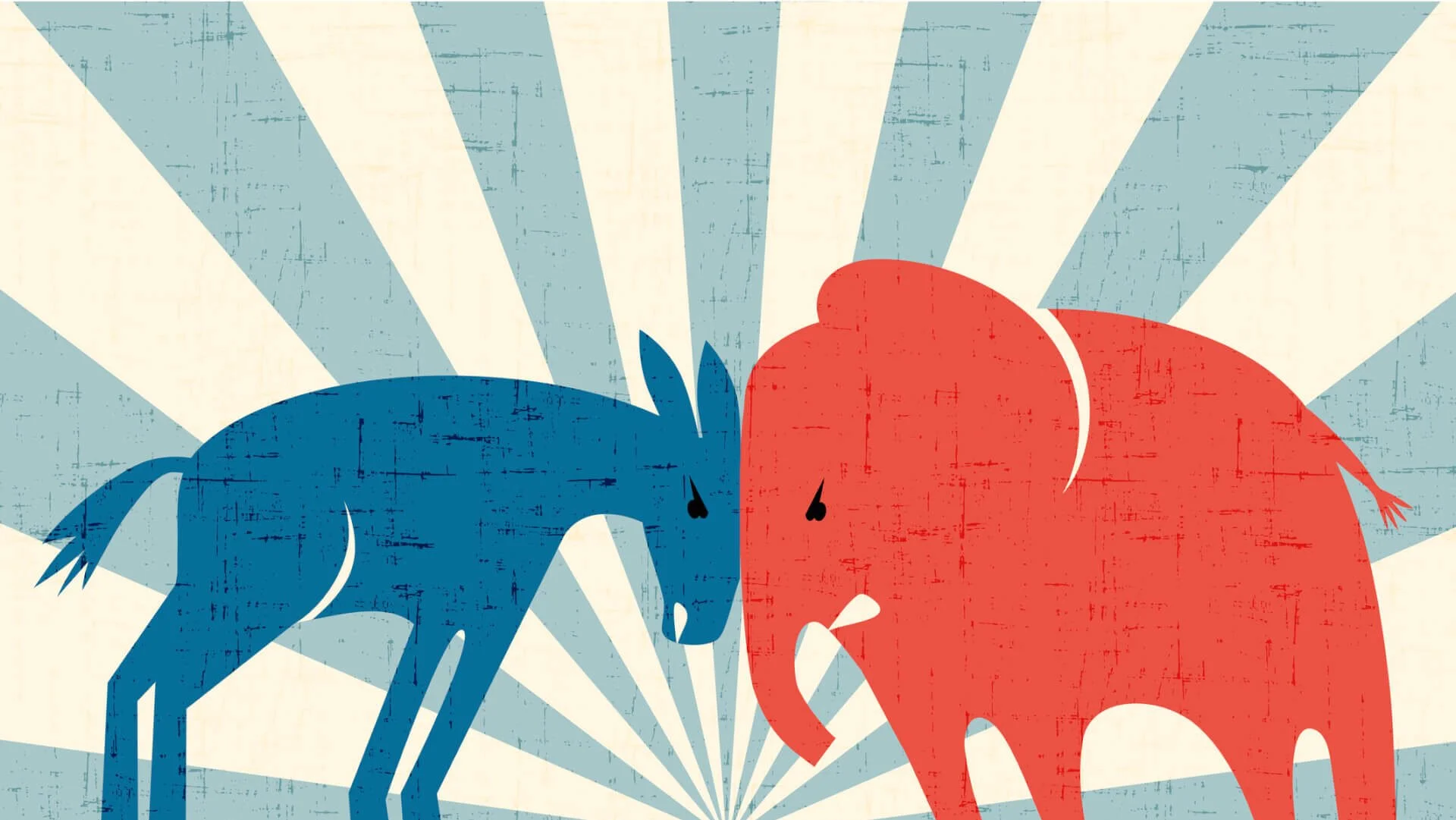
Photo credit: https://azmirror.com/2022/03/18/democrats-republicans-view-precinct-committeemen-in-very-different-lights/
By: Ethan Adkins
On November 5th, 2024, Donald Trump was re-elected president, beating Kamala Harris in both the electoral college and the popular vote, which a Republican hadn’t won since George Bush in 2004. This election was noticeably different from previous cycles we’ve had in history. The first Black woman nominated by a major party versus the former president.
But how did we get here? How did Trump end up winning the presidency again after being the first president to be convicted of felony charges and being twice impeached? To answer that question, first, we need to zoom out and look at the group that decided the election: young men.
In 2024, male voters overwhelmingly supported Trump over Harris. According to CBS 2024 Exit Polls, in the key battleground state of Pennsylvania, Trump won 56% of the votes from men under 30. He also won 54% of Latino men nationally, notably better than he did in 2020 against Biden. On the other hand, according to The Civics Center, Harris crushed the women's vote, winning 61% of the vote from women ages 18–29. The reason why I think so many men switched from voting for Biden in 2020 to Trump in 2024 is the use of social media.
It is no secret that social media is an ever-growing part of everyday systems. Over the past few years, stretching back to 2020, social media and politics have started to clash more and more. We see across all social platforms the battle for messaging between the two parties. People such as Charlie Kirk, with Turning Point USA, are a great example of how conservative messaging helped win the election for Trump and alienated a base of young men.
Like him or not, it’s hard to say that Kirk’s conservative messaging and social media branding were effective. He would go to college campuses, debate college students who didn’t fully know what they were talking about, then post clips of him “DESTROYING THE LIBERALS!!!!!!”, and repeat. This strategy, in my opinion, was effective in reaching the conservative base and riling them up. While maybe not hitting the middle ground of undecided voters, he was able to spread whatever information he wanted, whether true or false, pass it off as facts, blame the liberals, and then his base and viewers would be eager to fight back against the liberals. A lot of other conservative figures also use this same strategy, people like Ben Shapiro and the Fox News cast.
What I find interesting is talking about the effect of that type of messaging around our own school.
While doing my research for this story, I made a survey asking a few things: “What is your party affiliation?” “What is your gender?” “How well do you feel your awareness is on ____ topic,” and finally, I asked “Where do you get your news and information from?”
My results show exactly what I’ve been saying the whole time: out of the 18 responses I got (8 men, 10 women), it shows that the majority of people who identify as Democrats are women—8 women compared to 2 women who identified as Republicans. On the male side, of the 8 responses I got, 5 identified as Republican, 2 Democrat, and 1 centrist. Another trend that showed was where Democrats and Republicans are getting their information from. A majority of people who identified as Democrats got their information from credible news sources, while a majority of people who identified as Republicans got their information from social media platforms.
To me, this just shows how tight a grip conservatives have over social media. However, while the rise of conservative political commentators is becoming more and more popular within those media circles and even in our government, we’re seeing the same thing on the left start to take place. Notably, Influencers like Dean Withers and Parker (ParkerGetAJob). Instead of letting the right control the media trend, they’re using the tactics the right is using to fight back.
We’re also starting to see our politicians using the podcasting game to do some self-campaigning. Probable 2028 presidential candidate and current Governor of California, Gavin Newsom, recently started his own podcast, “This is Gavin Newsom,” where he brings different guests to talk about politics and current events. He brought on guests like Steve Bannon, Charlie Kirk, and Ben Shapiro, from whom he faced a lot of backlash. However you feel about Gavin Newsom, you can’t deny that he is trying to expand his social media presence the same way the right is, to bring left messaging more mainstream.
The future of political campaigning is going to be a social media battle. Whoever can give the best messaging to the public through platforms like Instagram, TikTok, X, and Facebook will win elections. We saw it in 2024, when the right-wing media was able to convince their base that Biden was the worst president in American history.
Whether this will become a good thing or a bad thing is yet to be seen. On one hand, targeting social media allows a candidate to reach a widespread audience across all ages, races, and social classes. On the other hand, when we start using social media to find who we like, we run the line of only seeing what each candidate wants us to see. As I said with Kirk, he posted clips online of his successes only, and never any debates he lost. When we only consume the videos they want us to see and put less value on speeches, live debates, and self-research, we lose an element of democracy.
Social media is an extremely valuable tool for the future of communication, but it also leads to great dangers of misinformation. Use social media as a tool to expand your own research on a candidate, not an end-all, be-all.