Everybody Talks: How Gossip Affects Mentality

Photo credit: UNM News
By: Marie Catterson
“If you don’t have anything nice to say, don’t say anything at all” was the phrase repeated too many times in elementary school. As kids, we’re taught that kindness is key. You never know what someone is going through, so saying mean things or making fun of them is never okay.
As we grow older, it seems like it’s encouraged to talk about the people you don’t like. If someone does something weird, you laugh about it and tease them to your close friends. If someone wronged you, you make it your mission to tell everyone what a horrible person they are. It’s become a part of our daily lives to talk about others.
But how does that affect our behavior? Is gossip really as beneficial as some say to excuse it? Or do the cons outweigh the pros?
Using an anonymous survey, I asked 24 Jenks students from all different grades to try and answer these questions and find out how harmful gossip really is.
The Data:
To understand how gossip affects your mentality, we first need to determine how big a part it plays in people's lives. Those who participated were asked questions about how often they gossiped about others, if they had ever talked badly about their friends, and whether or not their friends had ever talked badly about them.
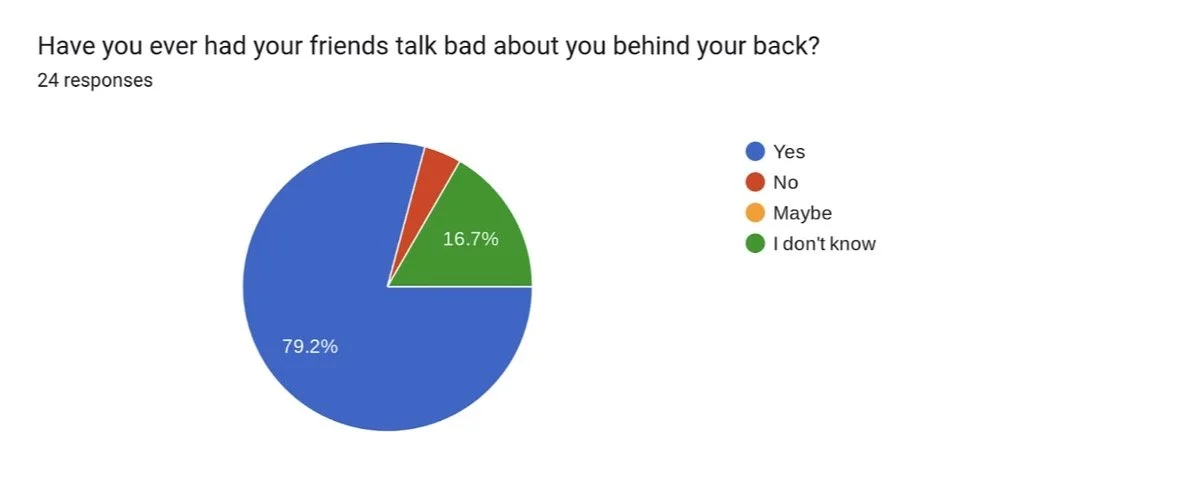
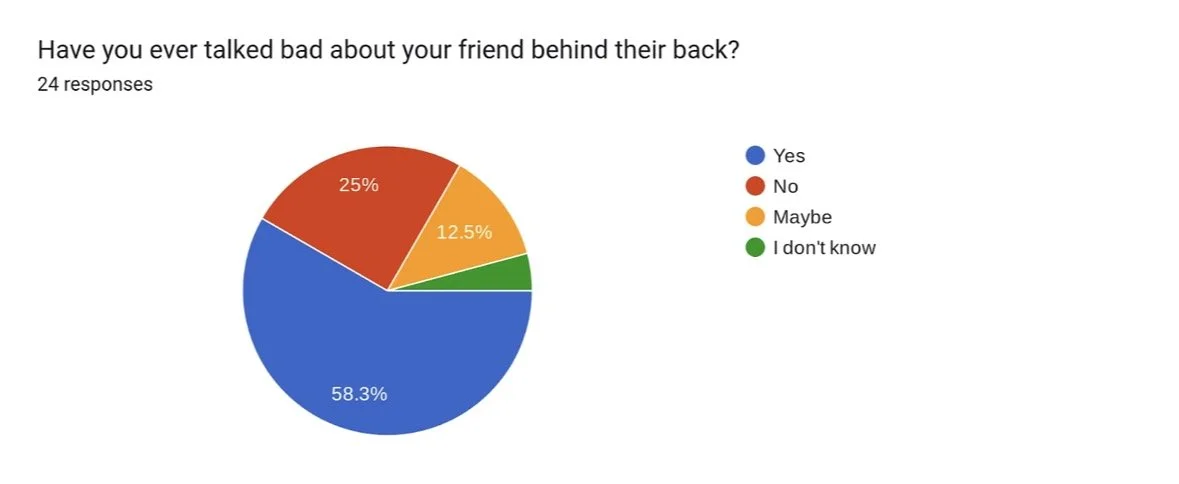
Out of those surveyed, 79.2% said they had their friends talk badly about them behind their back. Significantly fewer said that they had talked badly about their friends behind their backs before, about 58.3%. This data shows that a majority of those surveyed have had gossip in their lives, and that the rumors started closer than they thought.
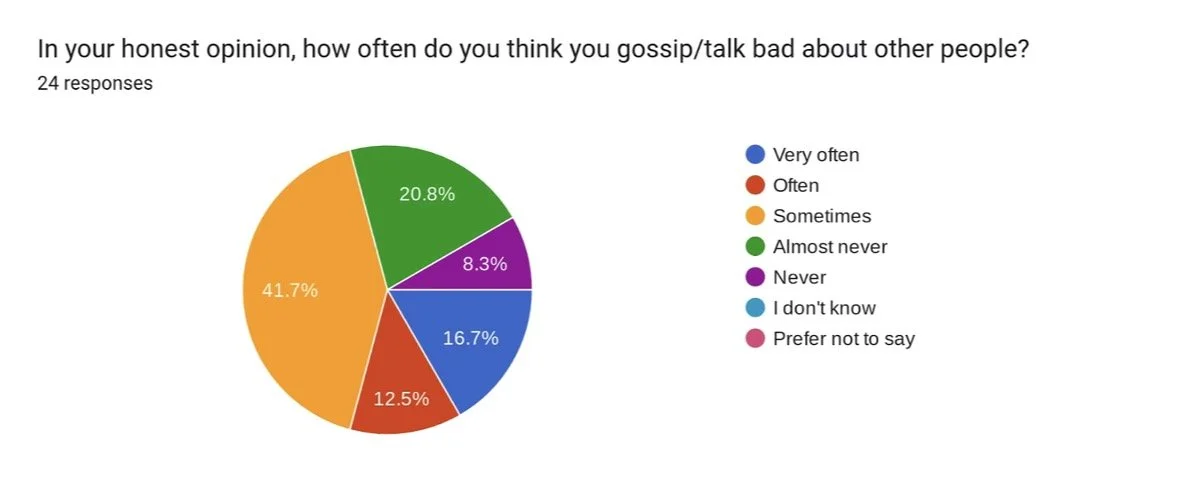
When asked how often they gossiped, there was a much wider variety in answers. While most said they sometimes talk badly about others (41.7%), 29.2% said they talked badly about people often or very often, making it a part of their everyday life.
This is just the raw data, but how these statistics affect people mentally is the real question. In a study published by the National Library of Medicine, researchers found that gossip and negative talk of others led to an increase in anxiety and a decline in self-confidence in teens and young adults.
Participants were asked to go into detail on how they believed gossiping affected their mental health, behavior, and how they talk about others now. Emotions were mixed across the responses, ranging from relief to anger to guilt. 37.5% of the responses reported negative feelings after talking badly about someone, with responses like these:
“I feel like a terrible person. I used to gossip a lot, and I try my hardest not to do it anymore because I realized just how much of an impact it makes on others,” said someone who responded to talking about others very often.
“I feel like most of the time I’ve just vented my feelings, but sometimes I do feel guilty and like a bad person for talking badly,” said another who stated they gossip often.
“I try not to talk about people to be malicious, and if I catch someone else doing that, I tend to stay away from them…because if I talk about someone behind their back, I usually feel like crap and like I'm a bad person,” said a respondent who rarely ever gossips.
Responses like these were expected, but some said gossiping improved their moods, like these respondents who reported they gossip often but feel fine afterward:
“Lighter, like I got something that’s been bothering me off my back.”
“Normally, if I talk bad about someone, it’s because they did me wrong and I’m just expressing my feelings.”
“I don't really feel emotional; it's just I need to tell people when I find something out.”
“It’s fun, I guess,” said one respondent who talked very often about others.
Conclusion:
Looking over all the responses, it's safe to say that there is a pattern sticking out in the data, giving an answer to the question we had at the beginning: How does gossip affect your mentality?
Of the 24 respondents, 87.5% of the respondents, whether they gossiped often or hardly gossiped at all, said that they felt negatively after they talked badly about someone, and that it affected their behavior and how they acted around others.
Multiple respondents said they had lost friends and trust in gossip and rumors. Several wrote that their mental health declined due to both gossiping and being gossiped about, saying that it made them push away others or change things about themselves.
With all this evidence, a conclusion comes out clearly. When it comes to gossip, the negative effects of low self-esteem and declining mental health overpower the positive feelings of exposing others to your friends. Talking bad about others negatively affects your attitude, mental health, and self-image.
So the next time you find yourself in a group that gossips, take a second to think about that golden rule before you speak.