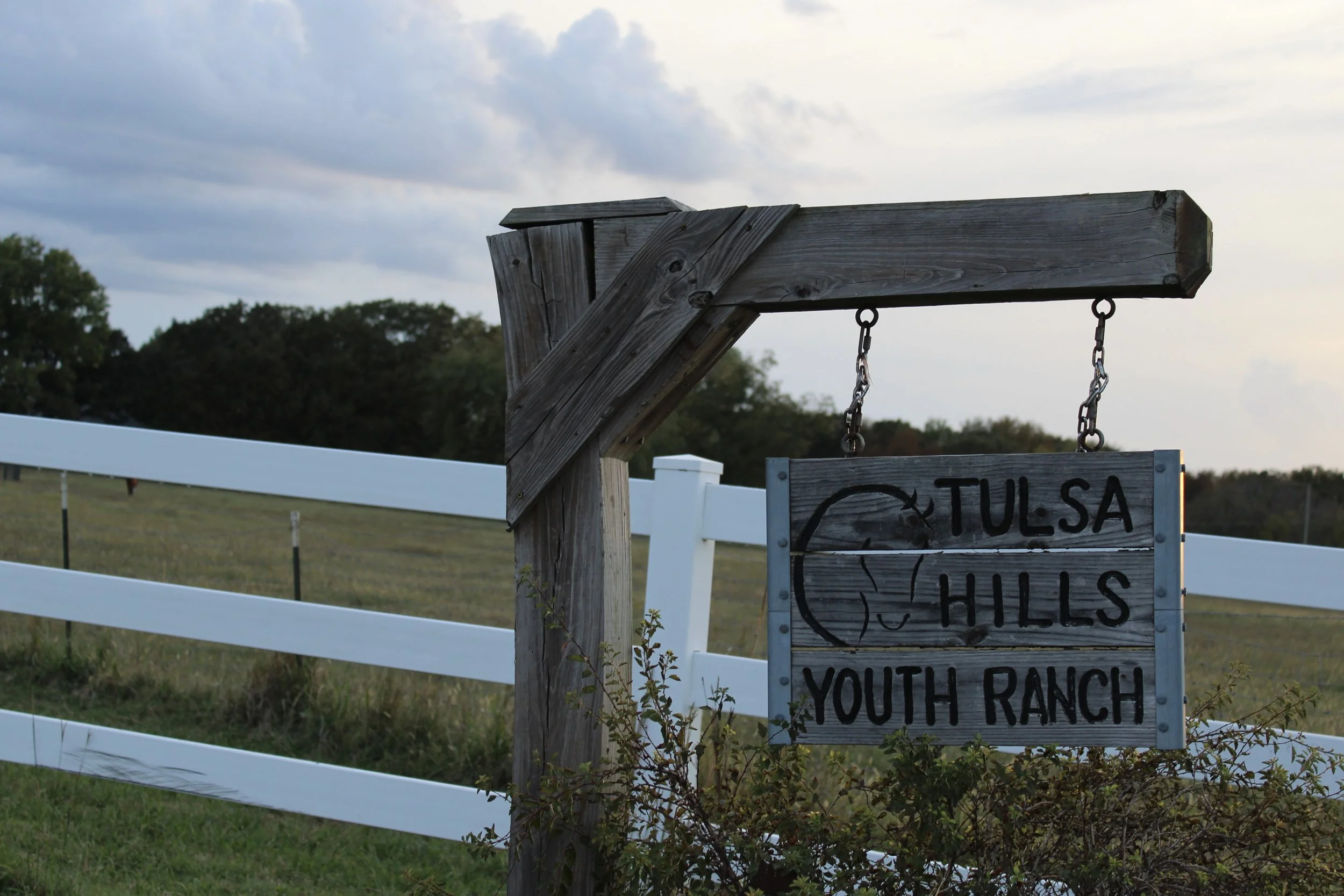
By Dana Ramirez Chavez
As volunteers sat by the water, basking in the summer sun, Kyle Livingston drove past in his truck. Rather than scold them for taking a break, Livingston acknowledged the moment with a smile and wave. He later remarked that he wished he had a camera to capture it. The work could wait a little longer.
That brief exchange reflected the kind of atmosphere Kyle and his wife, Tricia, have cultivated at the Tulsa Hills Youth Ranch, one where volunteers are valued not only for the work they do, but also for the meaningful connections they form along the way.
The Tulsa Hills Youth Ranch is a nonprofit organization dedicated to rebuilding the trust in children who have experienced abuse, trauma, or difficult life circumstances through animal-assisted mentorship. Each week, children attend a 90-minute session with an assigned volunteer mentor. The mentors are encouraged to engage in meaningful conversations while they participate in activities like horseback riding, woodworking, and fishing.
For Kyle and Tricia, that emphasis on relationships extends beyond the children they serve.
After being invited by ranch founders Michael and Donna Freeman, the couple moved from Corpus Christi, Texas, to Tulsa in 2014 with their three children: Madison, Matthew, and Micah.
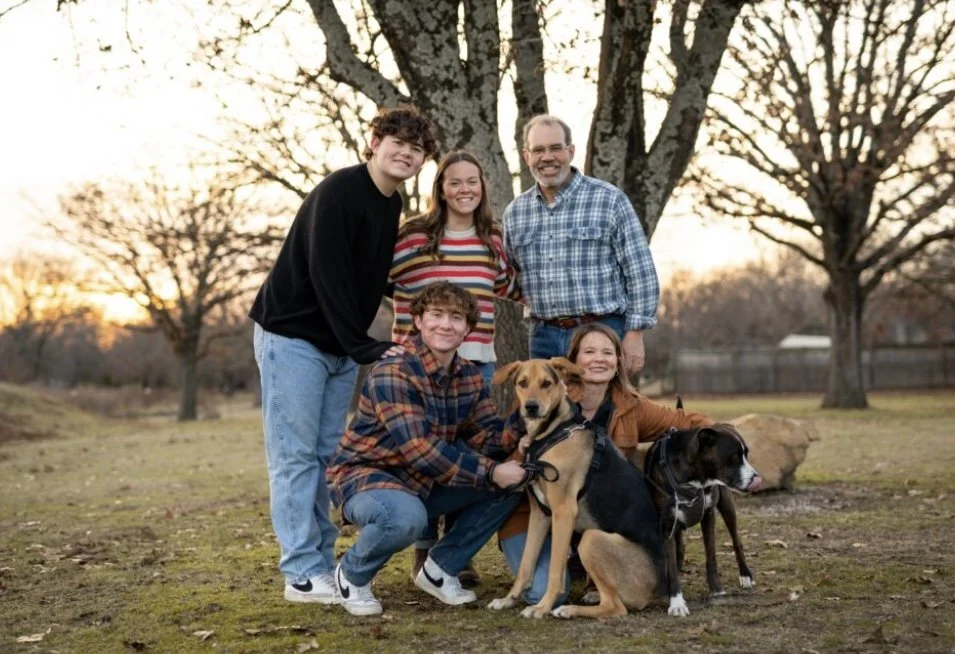
Tricia and Kyle Livingston alongside their three children and pets.
“At the time we were experiencing a strong sense of compassion for youth who had experienced trauma and were displaced from the family setting we were all intended to grow up in,” Kyle said when asked what inspired the move.
“Donna enlightened us to the particularly challenging plight of youth in Oklahoma who were in the custody of the state, many who had experienced trauma, especially in the form of abuse,” he continued.
Since then, the couple has worked alongside each other in the ranch's daily operations.
Kyle serves as the executive director and pastor, while Tricia coordinates intake for both volunteers and the youth served by the organization, as well as other countless details that emerge during the week.
“For us, the completion of tasks is secondary and subservient to one's sense of peace and joy,” Kyle said.
While the ranch depends on its volunteers to keep daily operations running, the children who are a part of the program remain at the center of its mission. Through consistent interactions with assigned mentors, animals, and Tricia and Kyle, children are given the opportunity to develop trust, build confidence, and form relationships in an environment where they are encouraged to feel safe.
For the Livingstons, creating that safe environment calls for more than simply organizing activities. It means fostering relationships that allow children to feel comfortable opening up and engaging with the people around them, as well as taking time to reflect on what can be improved.
“We are constantly assessing if the way we use and spend resources, the way we structure the schedule of the program, and the way we spend our time is serving to prioritize those relationships,” said Kyle.
For Jenks junior and THYR volunteer Heidi Santos, one of the first things that stood out about the Livingstons was their welcoming nature.
“They were very welcoming and understanding people,” Santos said.
Santos recalled feeling nervous when she first began volunteering because she had little experience in that environment. She was unsure of what to expect, but Kyle and Tricia quickly helped ease her concerns by encouraging her to ask questions and allowing her to adjust on her own. Rather than making volunteers feel as though they were there simply to complete tasks, Santos said, the couple made an effort to get to know each person individually.
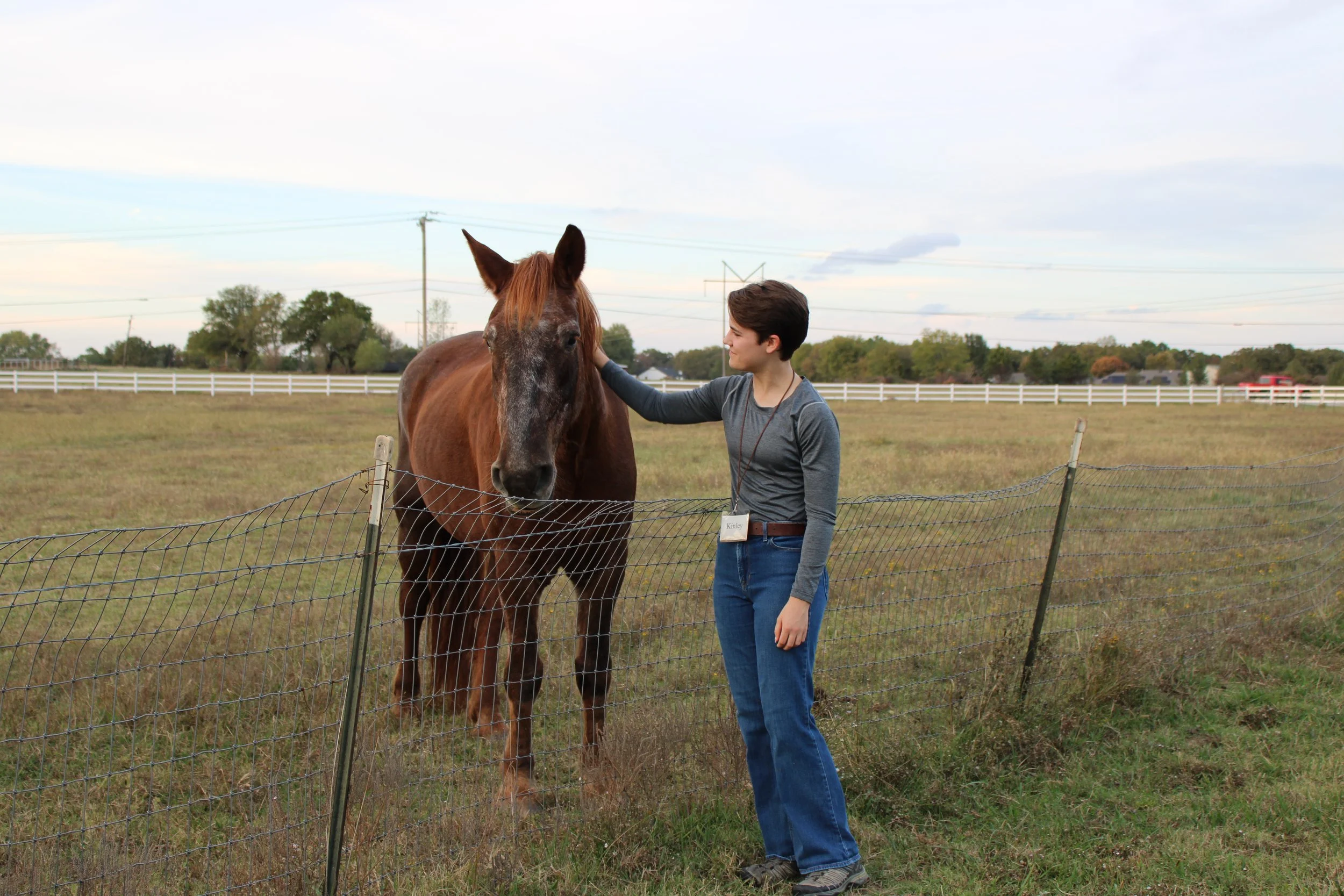
THYR volunteer spending time with horse.
That philosophy is reflected in the different ways the couple interact with volunteers. The pair's wish is that any volunteer who spends time on the ranch is able to increase their own personal sense of happiness. Santos described Tricia as someone who regularly checks in with volunteers and makes sure they have what they need.
“She acts like we're her own kids,” Santos said. “She treats us all the same, and she's just always there asking questions.”
Beyond her responsibilities at the ranch, Tricia makes an effort to remember details about volunteers' lives, helping create relationships that extend beyond their time at the property.
“They remember that I have a little sister and that I’m always busy with her,” Santos said. "They'll be like, ‘oh, there's no rush.’ ”
Tricia's ability and effort to remember small details contributes to the relationships she builds with the community of the ranch.
While Tricia is seen as a motherly figure to volunteers and children alike, Kyle is described as bringing a different kind of energy to the ranch. His humor is just one of the many ways he connects with volunteers while still making sure they feel supported.
“He’s like more on the funnier side,” Santos said, smiling.
Despite his joking nature, Santos said Kyle remains attentive to the people around him. His willingness and enthusiasm to engage with volunteers, check in on them, and make room for moments of laughter contributes to an environment where people feel excited and comfortable returning.
“One thing that stuck with me is whenever we celebrated his birthday,” said Santos, referring to another volunteer. “I think it's so thoughtful how he didn't ask for that, but they still thought of him and went out of their way to buy him a cake of different flavors.”
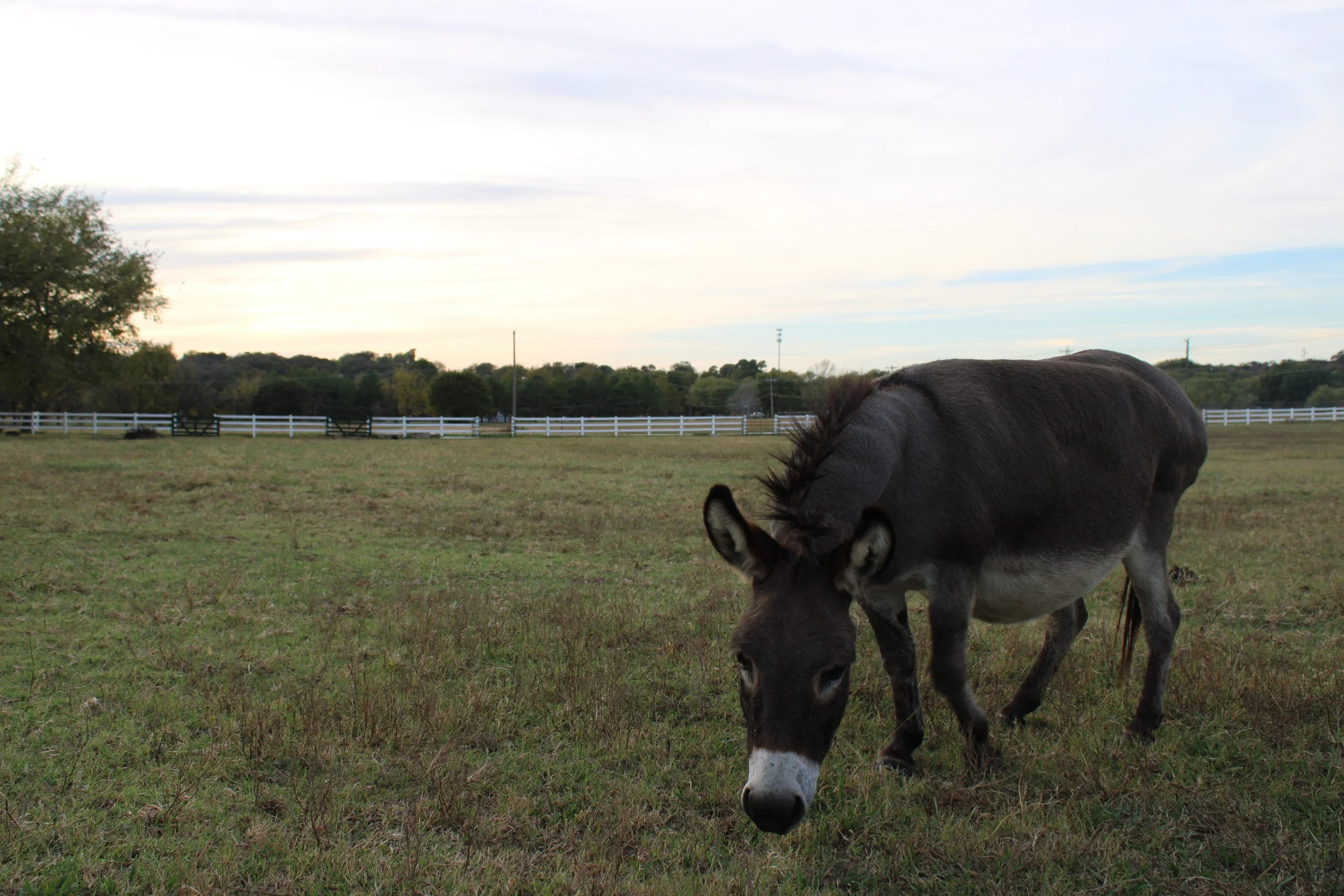
Milo the Donkey enjoying a nice autumn afternoon
For the Livingstons, creating that sense of belonging and community is part of what makes the ranch's work meaningful. While the daily responsibilities help keep the organization running, the relationships formed between mentors, children, and volunteers are what gives those responsibilities their purpose.
“We feel human relationships are primary and that everything else is intended to serve the cultivation of those relationships,” said Kyle.
At the ranch, the impact of that philosophy extends beyond the activities themselves. Whether through a conversation between a child and a mentor or a simple moment of connection with an animal, the Livingstons hope to create an environment where meaningful connections can grow.
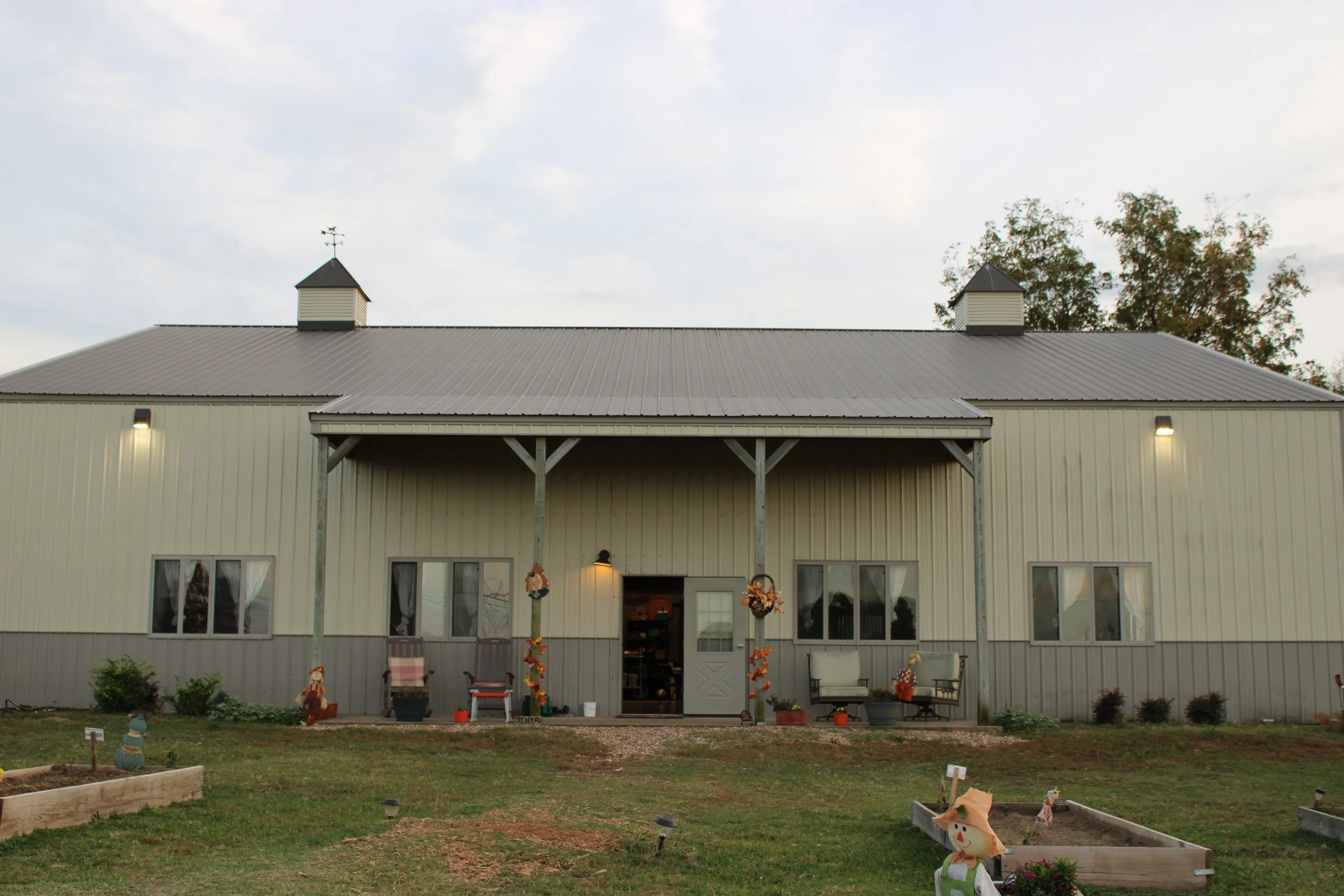
The central barn, where volunteers meet with Kyle and Tricia to discuss tasks, and where children meet with their assigned mentors.
The moment by the water serves as a reflection of their philosophy. Even when there is work to be done, the Livingstons recognize that some of life's most meaningful moments happen when people are simply taking the time to sit and enjoy one another's company.